


Alloy Wheel Blog | Industry Insights & B2B Sourcing Guides | Holywheel
5 Alloy Wheel Styles: A Dealer’s Range Planner

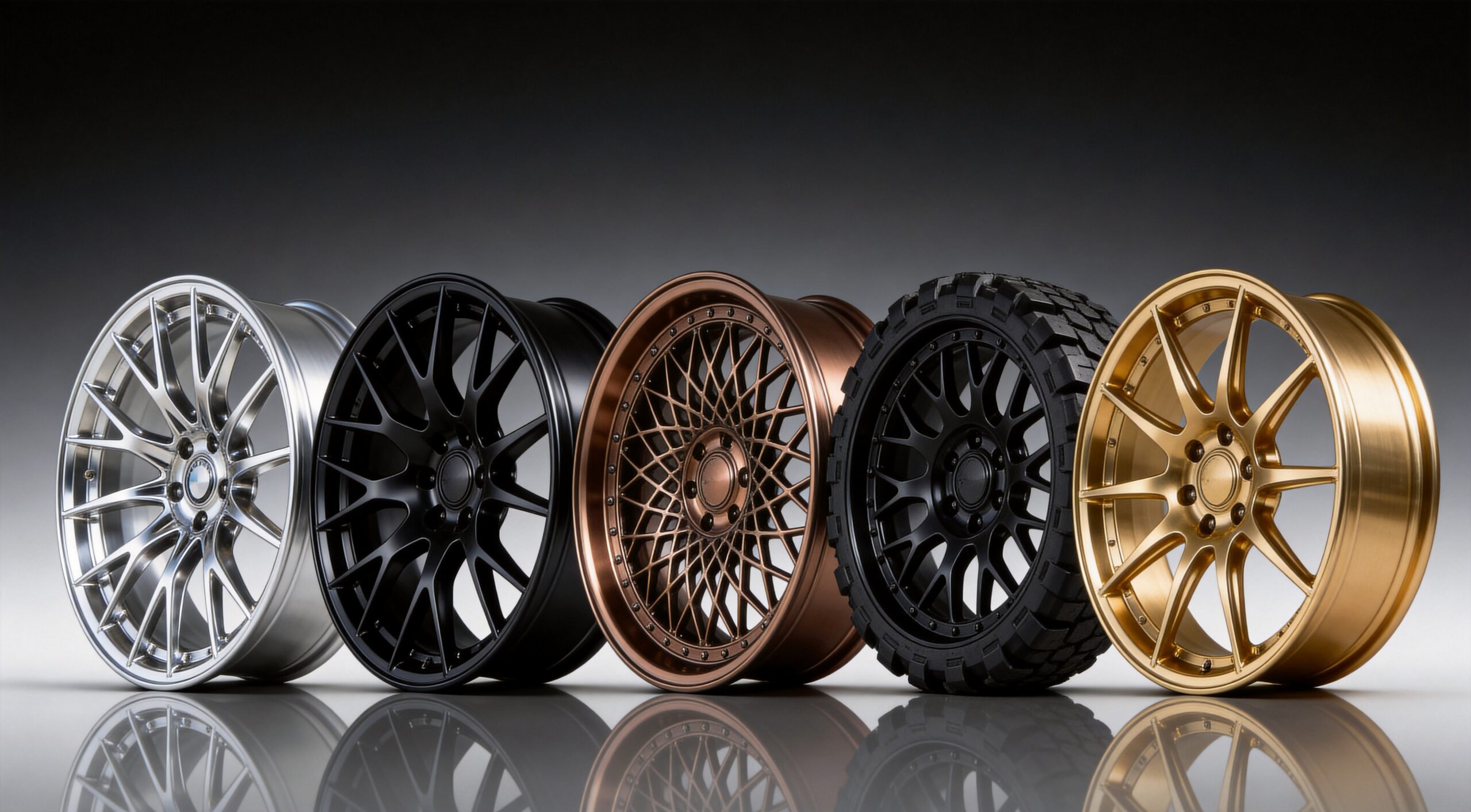
A useful wholesale wheel range gives customers a choice without leaving the shop with too many unproven configurations. Compare design families, then use your own enquiries and sales to decide which specifications deserve stock. These five families are a planning aid, not a market sales ranking.
Five visual families to compare
- Five-spoke: compare spoke shape, spacing and finish against the customer’s reference.
- Split-spoke: check how each spoke branches and how the face looks at the quoted width.
- Multi-spoke or mesh: use close photographs to review the pattern and finish detail.
- Concave-face: approve the actual profile at the selected width and ET.
- Pronounced-lip: compare the lip and centre relationship, including front/rear differences.
These descriptions do not identify construction, load rating, authenticity or fitment. Some designs combine more than one family.
Will every size have the same appearance?
Ask for the profile of the exact configuration. BC Forged explains the relationship between specification, brake clearance and profile for its builds. Our concave versus deep-dish guide helps separate face shape from lip appearance.
Which ones should my shop stock?
Start with actual requests, successful fitments and repeat sales by vehicle. Record the design, complete specification, finish and quantity for each order line. Separate committed customer demand from enquiries that have not become orders.
Trial a defined range within the supply terms you agree. Use your own sales data to estimate turnover and margin; this style list supplies no sales forecast.
What needs checking beyond appearance?
Compare dimensions, PCD, ET, centre bore, fasteners, brake clearance and load evidence. Identify the product accurately and agree caps or markings. Read OEM and aftermarket descriptions if a reference resembles a branded original.
Turn the shortlist into an order enquiry
Choose references, list quantities for each configuration and add your destination. Ask which lines are stock and which need production. The mixed-order guide explains that distinction.
Request a focused wheel shortlist for your vehicles and customers. Tell us the styles already requested and the gaps in your range, so the enquiry can be narrower than “send every catalogue”.
Browse the wheel catalogue with your shortlist of required configurations.