

Posts by Holywheel

Custom Forged Wheel RFQ: A Checklist for Dealers

Prepare a custom forged wheel RFQ with vehicle details, specifications, quantities and finishes. Copy the dealer checklist before requesting a quote.

Wheel Offset vs Backspacing: Measure and Compare
Offset and backspacing locate the hub mounting face from different reference points. Offset uses the wheel centreline; backspacing uses the inner rim edge. To compare wheels correctly, keep the reference, unit and width beside the number.
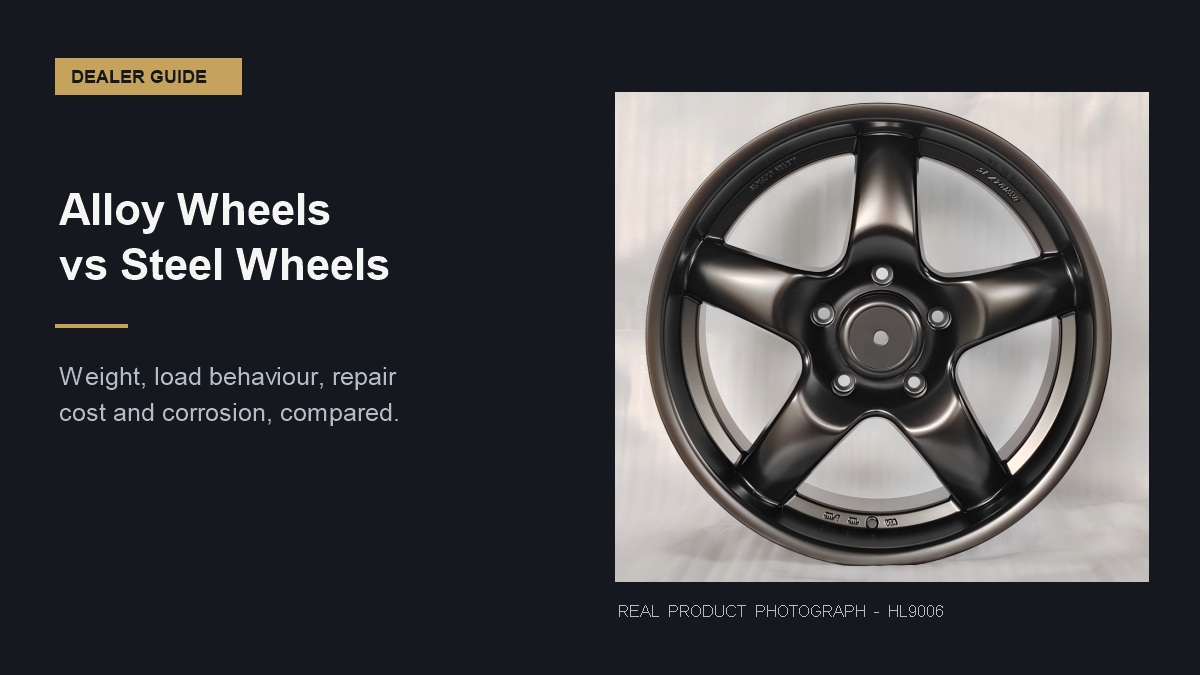
Alloy vs Steel Wheels: A Fleet Buying Checklist
For a pickup or fleet, compare wheels around the work they must do: the vehicle, axle loads, tyres, road use, replacement needs and purchasing budget. Alloy or steel is one specification field, not a complete decision.
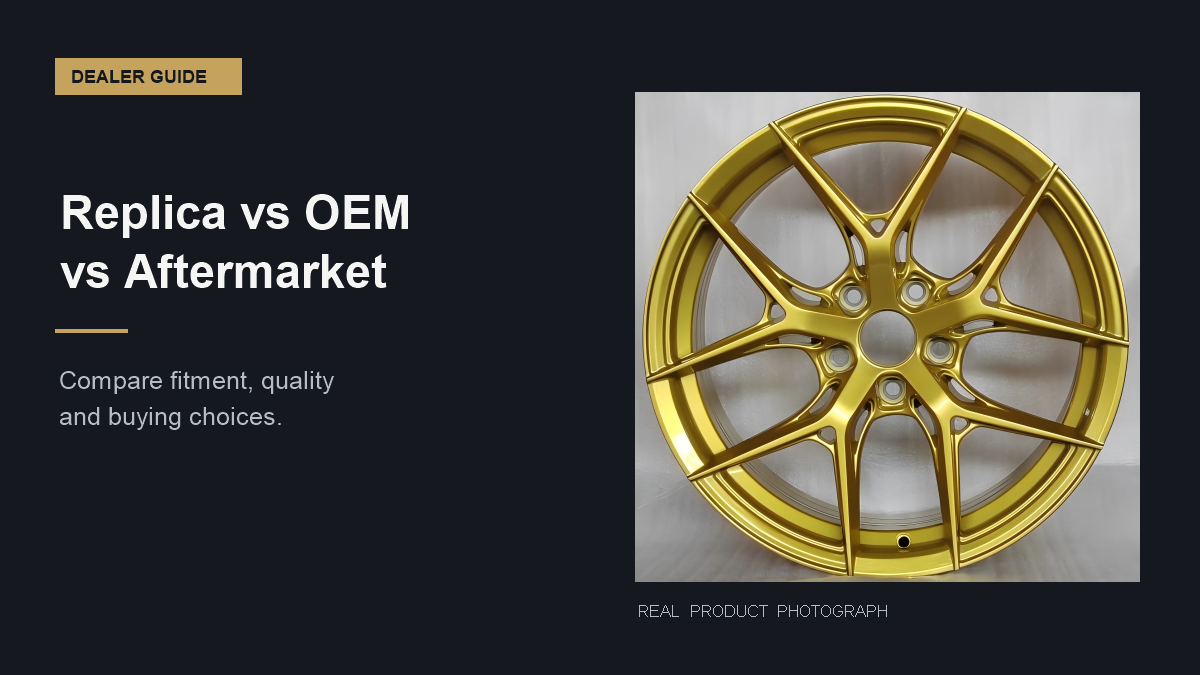
OEM vs Aftermarket vs Replica Wheels: Buyer Guide
OEM, aftermarket and replica describe product origin or design. Use those labels to identify what is being sold, then check the exact wheel’s specification, evidence and supply terms. For a dealer, the useful question is which product meets the customer’s requirement and can be described accurately on the quote.
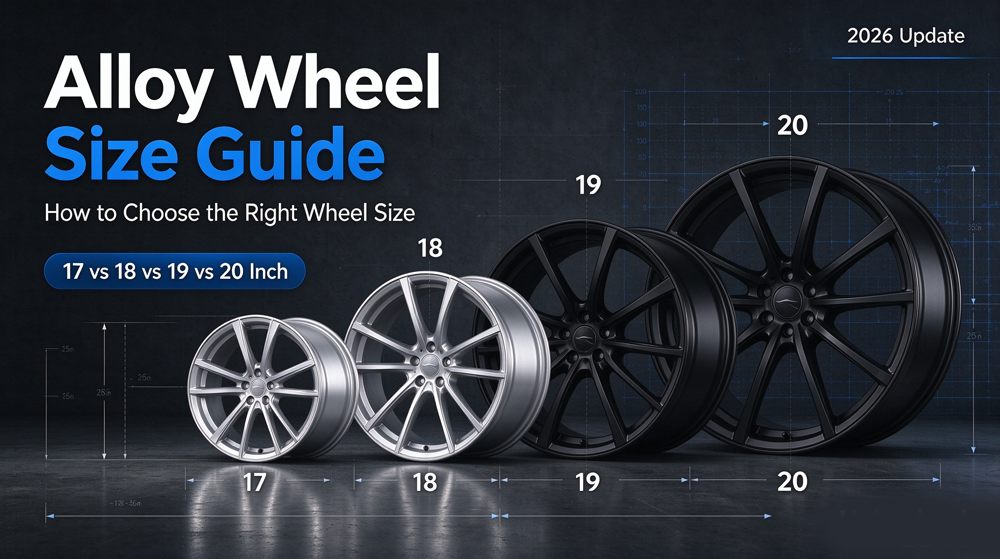
17 vs 18 vs 19 vs 20 Inch Wheels: How to Choose
Choose between 17, 18, 19 and 20 inch wheels by checking the vehicle’s approved combinations, intended tyres, brake clearance and customer use. For a shop, the best size is one that meets those requirements and has a workable supply and replacement plan.

Wholesale Wheel MOQ: Stock, Custom and Mixed Orders
For wholesale wheel orders, use confirmed stock for ready configurations, production for specifications that need manufacturing, and a mixed order when several lines can be agreed together. MOQ is one part of that choice. Availability, specification and the shipment plan still need to work line by line.
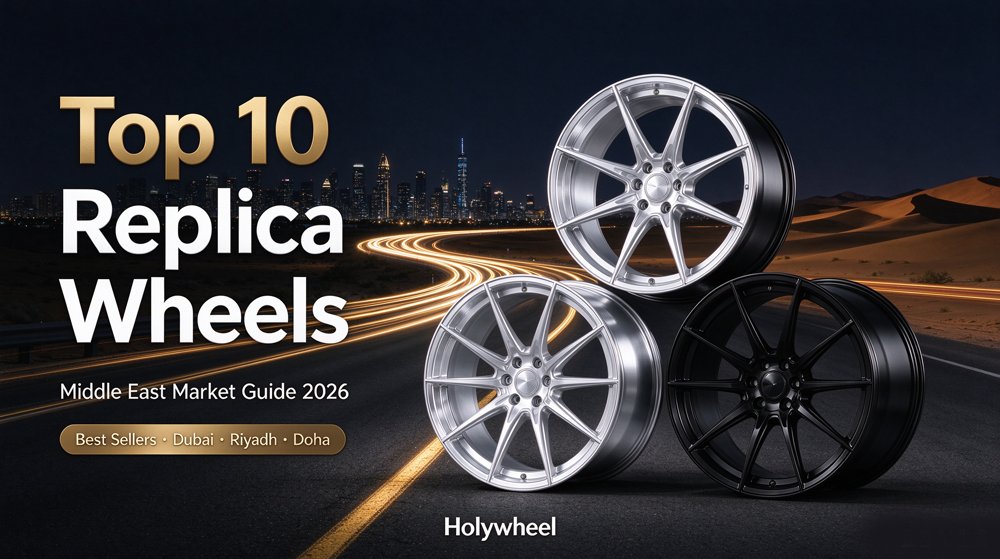
Replica-Style Wheels for Middle East Dealers
Plan a Middle East wheel range by the actual country, vehicles and customers you serve. A regional label is too broad to establish which designs will sell. Start with documented enquiries, identify the complete specifications and ask what can be supplied.
JWL vs VIA Wheels: Check the Product Documents
JWL and VIA are different markings. JWL concerns manufacturer conformity with Japanese technical standards; VIA involves third-party verification and registration. When buying wheels, ask which records cover the actual product rather than accepting a logo as proof for the whole catalogue.
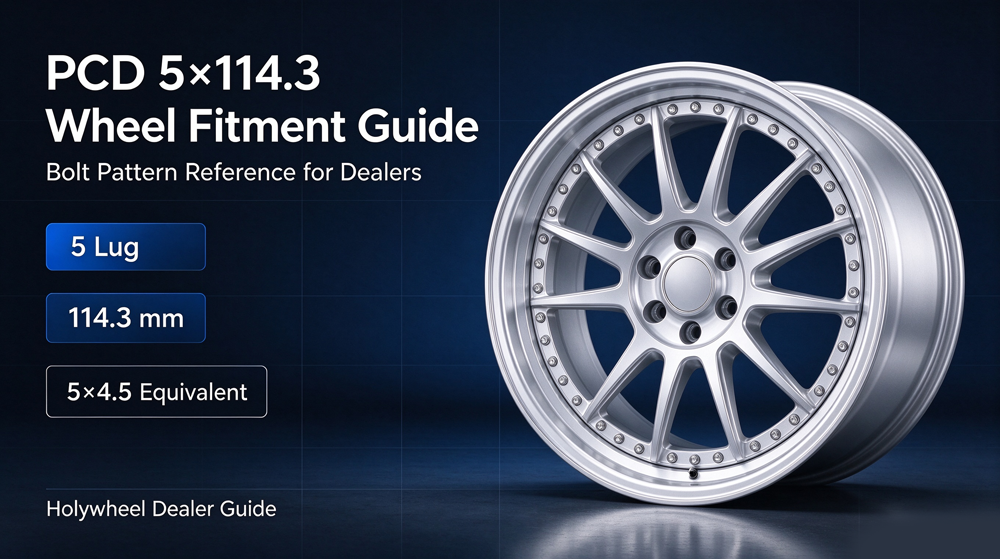
5×114.3 Bolt Pattern: What Else Must Fit?
A 5x114.3 bolt pattern means five mounting holes on a 114.3 mm pitch circle. It is the same bolt circle as 5x4.5 inches. It tells you the hole layout, not whether the complete wheel is right for the vehicle.
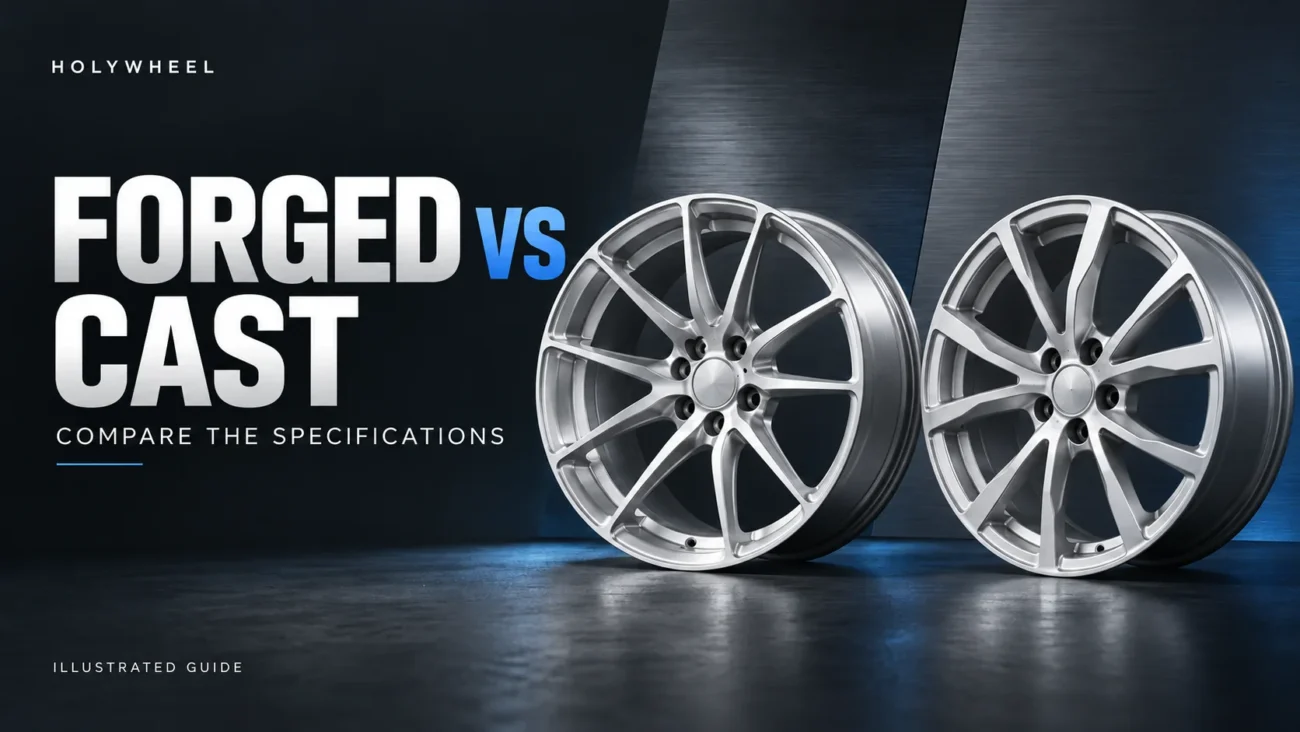
Forged vs Cast Wheels: Compare the Actual Wheel
Forging and casting describe how a wheel starts its manufacturing process. They do not give you a universal weight saving, load rating or price. Compare the actual products for the same vehicle requirements before deciding which construction to buy.
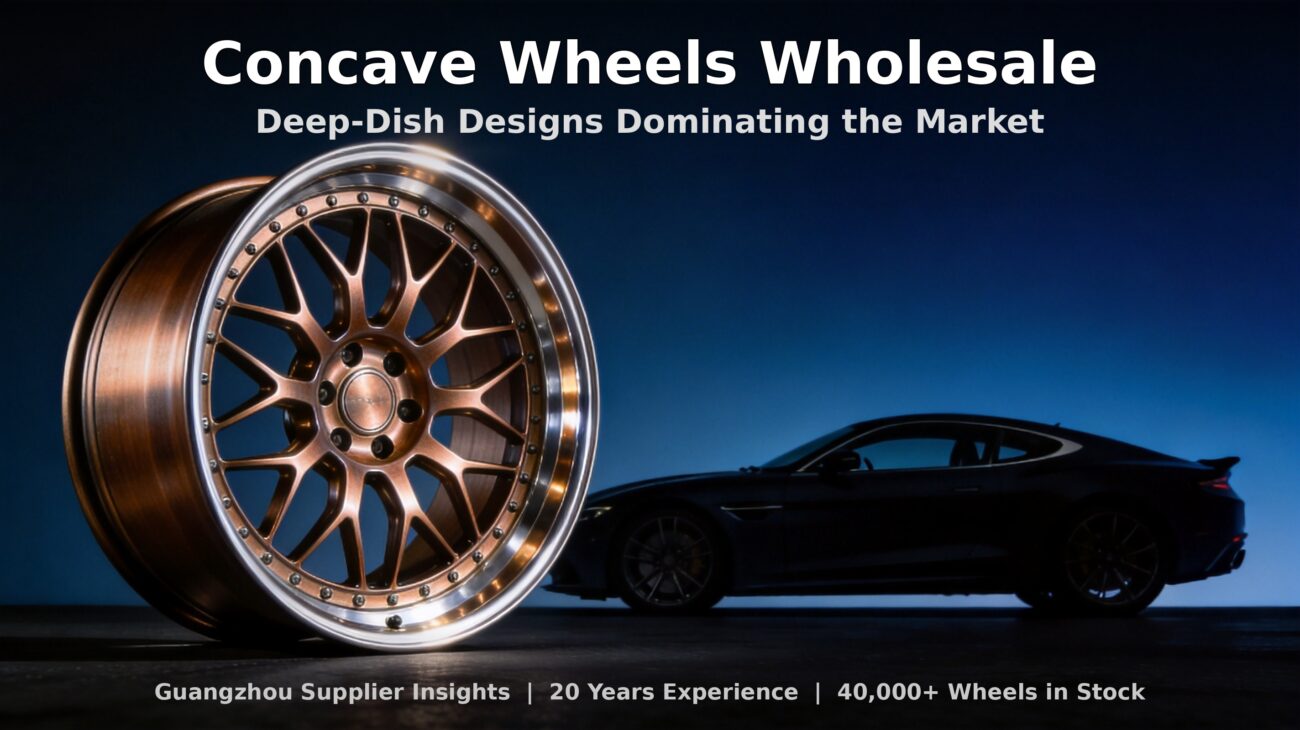
Concave vs Deep-Dish Wheels: What Buyers Should Check
Concave describes the inward shape of the spoke face; deep dish describes a pronounced outer lip. A wheel can combine elements of both. For a wholesale order, approve the profile at the exact width and offset you will buy, rather than assuming every size looks like the catalogue photograph.
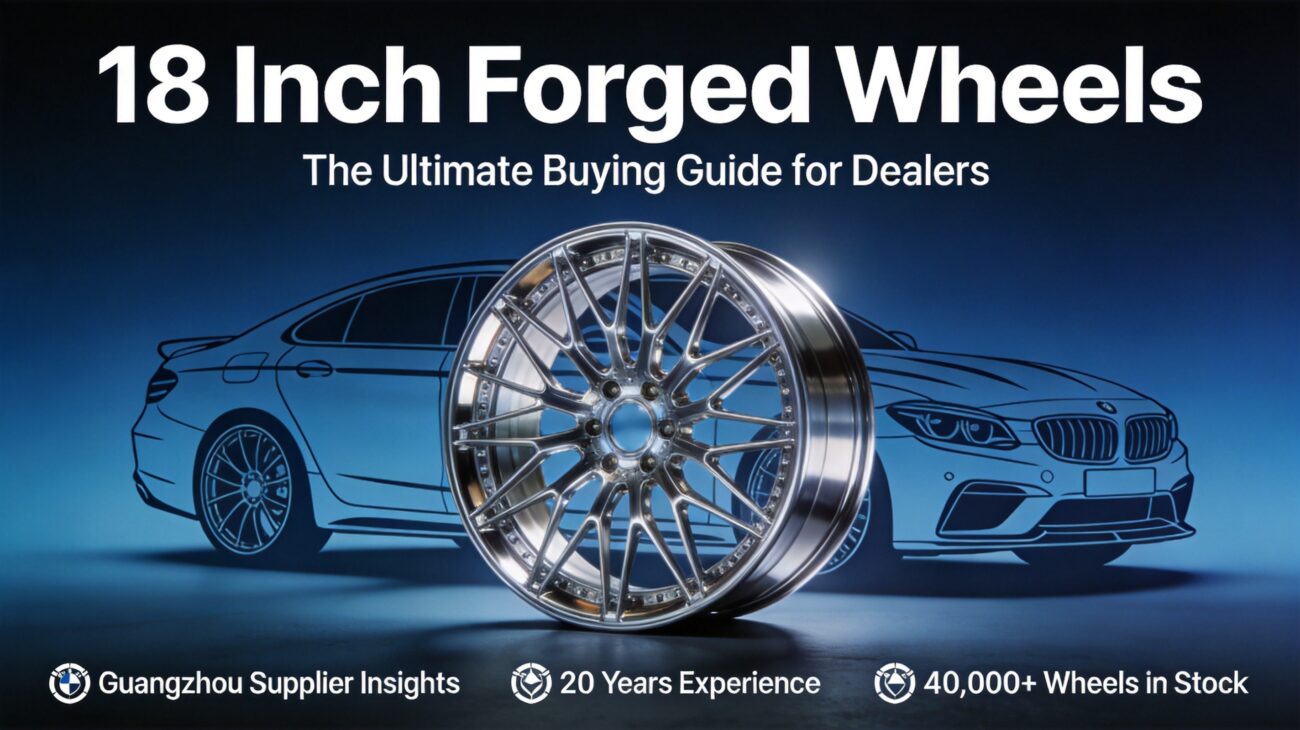
18 Inch Forged Wheels: A Dealer Buying Checklist
When comparing 18-inch forged wheels, ask for the specification and evidence behind the design. “18 inch” identifies the rim diameter, while “forged” identifies a manufacturing route. Neither tells you the wheel’s weight, load capacity or vehicle fitment.