

Alloy Wheel Blog | Industry Insights & B2B Sourcing Guides | Holywheel
OEM vs Aftermarket vs Replica Wheels: Buyer Guide

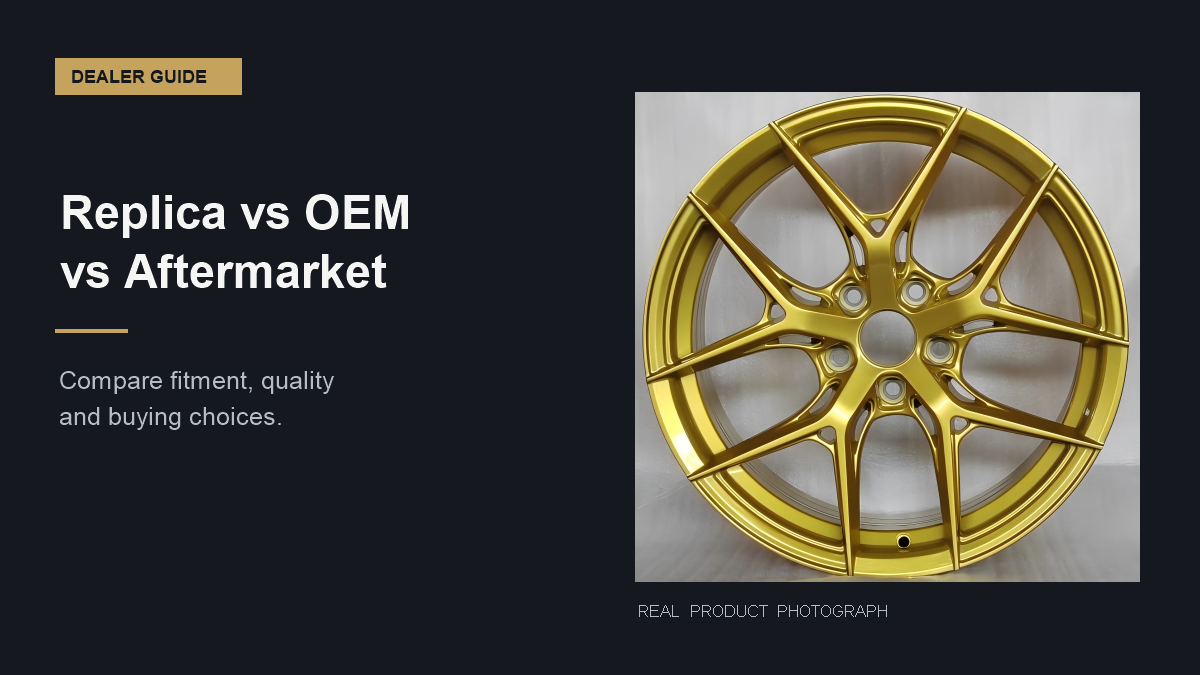
OEM, aftermarket and replica describe product origin or design. Use those labels to identify what is being sold, then check the exact wheel’s specification, evidence and supply terms. For a dealer, the useful question is which product meets the customer’s requirement and can be described accurately on the quote.
What does each label actually tell you?
| Label | What it identifies | What to ask for |
|---|---|---|
| OEM / genuine vehicle-maker part | A part supplied as original equipment or through the vehicle-maker’s parts channel. | Part number, application, condition and traceable source. |
| Aftermarket | A product offered outside that original parts channel; the category includes different design approaches. | Actual maker or supplier, model, specification and supporting records. |
| Replica-style | A description of a design that resembles another reference. | The offered product’s own identity, specification and agreed markings. |
Replica-style is a design description, not proof of original manufacture, matching specifications or authorization to use another brand’s marks. A replica-style wheel can also be an aftermarket product: these labels answer different questions.
Construction is another axis. OEM and aftermarket descriptions do not tell you whether a wheel is cast, flow-formed or forged. Read our construction comparison when that distinction affects the buying brief.
How do I verify a genuine-part claim?
Ask for the original part reference and check it through the relevant maker or authorized channel. Keep the seller’s description and source records with the purchase. A familiar centre cap or a photograph alone leaves the origin unresolved.
For a brand-specific example, HRE explains its authenticity checks using its own sales channels and identification records. Those checks apply to that brand. They do not authenticate a similar wheel supplied by someone else.
Which option suits the customer’s job?
- Replacing one damaged wheel: identify the existing part, dimensions, finish and axle position so the replacement can be assessed against what remains on the car.
- Changing a complete set: agree the new design and full wheel-and-tyre specification, then obtain the required application checks.
- Building shop stock: use recorded demand by vehicle and configuration, with a plan for repeat supply and single-wheel replacement.
These are purchasing scenarios, not recommendations for particular vehicles. A photo that matches the desired appearance still needs a complete specification.
What should I compare beyond the product label?
Compare the offered wheels on the same basis. Write the evidence beside the price so missing information stays visible.
- Fitment: diameter, width, PCD, signed ET, centre bore, fasteners and the exact vehicle or axle.
- Clearance: the proposed spoke and barrel profile against the actual brakes and relevant modifications.
- Product evidence: documented load requirements and the scope of any test or registration record.
- Condition and finish: new or previously used where relevant, the supplied colour and agreed acceptance criteria.
- Supply and support: availability, quantity, packaging, replacement supply and the written claim process.
The bolt-pattern checklist and JWL/VIA document guide cover two separate parts of this review. Neither an OEM label nor a forged label replaces the missing checks.
Is the lowest unit price the best buying decision?
Compare dated offers for the same configuration and inclusions. Record caps, valves, packaging and any separately agreed work. A price difference can reflect a different product or scope; ask for the difference to be identified before presenting it as a saving.
Use the wholesale quote checklist to organize that comparison. There is no universal price premium, weight saving or resale margin attached to these three labels.
How should the product be described for resale?
State whether the goods are original parts or independent aftermarket products. Agree the supplied caps and markings, and obtain the relevant professional advice when design or branding rights need clarification. Use the offered product’s own identity on the purchasing record.
For application-led preparation, use the BMW-style, Audi-style or Mercedes-style checklists. These organize enquiries; they are not blanket fitment approvals.
Send an enquiry that identifies the product
Tell Holywheel the reference design, whether you need an original part or an independent aftermarket option, and the required markings or unbranded arrangement. Add dimensions, finish, pieces per configuration, destination and documents needed.
Discuss your aftermarket wheel requirements and ask for the proposed identity, technical specification and commercial scope together in the written offer.