

Alloy Wheel Blog | Industry Insights & B2B Sourcing Guides | Holywheel
Alloy vs Steel Wheels: A Fleet Buying Checklist

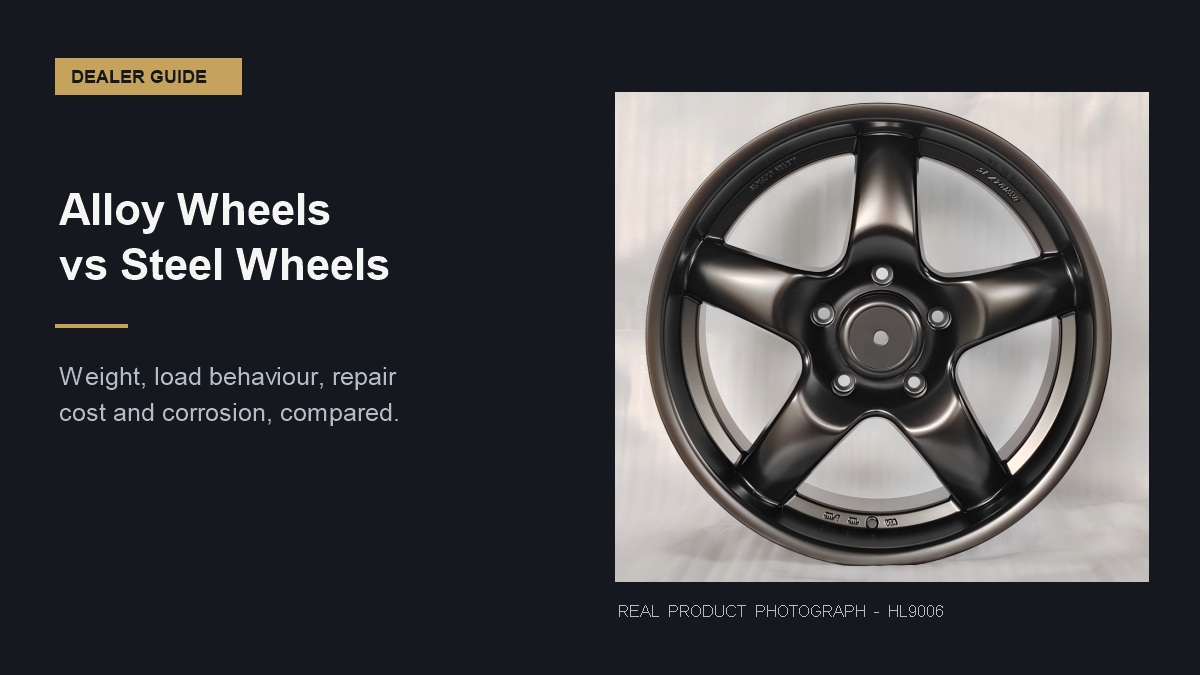
For a pickup or fleet, compare wheels around the work they must do: the vehicle, axle loads, tyres, road use, replacement needs and purchasing budget. Alloy or steel is one specification field, not a complete decision.
When should I keep steel or consider alloy?
Use the existing approved wheel as the baseline. Compare an alloy proposal only after both candidates meet the vehicle, tyre, mounting and load requirements. These are buying scenarios, not claims that a material always costs less, weighs less or survives damage better.
| Fleet situation | Practical choice | Condition to verify |
|---|---|---|
| A working vehicle needs a like-for-like replacement | Keep the existing approved specification as the first candidate, including steel where that is the approved wheel. Compare another material only for an identified benefit. | Exact replacement identity, availability, mounting compatibility and supported load. |
| An alloy option is requested for appearance or a measured weight requirement | Assess the proposed alloy wheel against that requirement and the total cost. Material alone does not establish the benefit. | Exact-build dimensions, weight where relevant, load evidence and the requested finish. |
| Downtime and replacement supply are the main concern | Prefer the acceptable product with a confirmed replacement plan and workable supply schedule, whichever material it uses. | Replacement reference, current availability and the cost of tyres, mounting and service interruption. |
| Load or fitment evidence is incomplete | Pause approval and obtain the missing record. A lower price cannot resolve an unknown application. | Product-specific records and an application review. |
For a seasonal-use example, Tire Rack compares alloy and steel winter wheel packages. That discussion is not a load approval for a commercial pickup or an instruction to fit any wheel of the same diameter.
What matters most for a working vehicle?
- Correct application, axle position and supported load requirements.
- Wheel and tyre dimensions, PCD, ET, centre bore and brake clearance.
- The required fasteners and mounting instructions.
- Documented weight, finish and inspection criteria.
- Replacement supply for a damaged or missing wheel.
- Purchase cost and the confirmed costs of tyres, mounting and downtime.
Keep the wheel load record separate from tyre capacity and vehicle limits. A styling description such as “heavy duty” does not supply the missing rating.
Can a damaged wheel simply be repaired?
Have a qualified specialist inspect damage and follow the relevant manufacturer guidance. Do not promise customers that all steel wheels can be straightened or that all alloys will fail in the same way. Damage and suitability need an assessment of the actual wheel.
How do I compare supplier quotes?
Give each supplier the same vehicle and wheel requirements. State whether you need a replacement for an existing configuration or are considering a change. Ask for the product drawing, load evidence, finish, quantity and supply schedule.
Use our quote comparison checklist for commercial details. If you are considering different alloy constructions, read forged versus cast wheels.
Request an alloy-wheel option for your fleet
Holywheel supplies alloy wheels. Send the vehicle list, duty, wheel specification, pieces per application and destination so an alloy option can be reviewed. Send your pickup or fleet wheel requirements. Unknown load or fitment data should be resolved before ordering, rather than filled with a general catalogue claim.