

Alloy Wheel Blog | Industry Insights & B2B Sourcing Guides | Holywheel
Wheel Wholesaler Ordering Models: Stock, Production or Hybrid

The Real Question: What Sourcing Model Fits Your Business?
With 17+ years in the wheel industry, we support B2B buyers in South America, the Middle East and Central Asia through certified production partners based in Guangzhou.
Here’s what I’ve learned about wheel wholesaler ordering models: there’s no one-size-fits-all approach to buying wheels wholesale.
When it comes to wheel wholesaler ordering models, different wholesalers operate differently based on their market size, capital availability, customer base, and business stage. Some prefer buying stock wheels for quick turnover. Others place production orders to control specs and branding. Many successful wholesalers use a hybrid approach — mixing stock and production to optimize their inventory and cash flow.
The key is understanding which model fits your situation, and finding a supplier who can support that model flexibly. Whether you’re sourcing forged wheels wholesale or cast alloy wheels in bulk, the sourcing principles are the same.
In this guide, I’ll walk you through the three main sourcing models I’ve seen work for successful wheel wholesalers, and help you figure out which one makes sense for your business.
Wheel Wholesaler Ordering Models: Model 1 — Stock-Based Sourcing (Fast Turnover, Lower Capital Pressure)
Who Uses This Model?
- New or smaller wholesalers just starting out
- Wheel shops and retailers with limited warehouse space
- Buyers testing new markets who don’t want to commit to large quantities
- Businesses with tight cash flow who need fast inventory turnover
How It Works
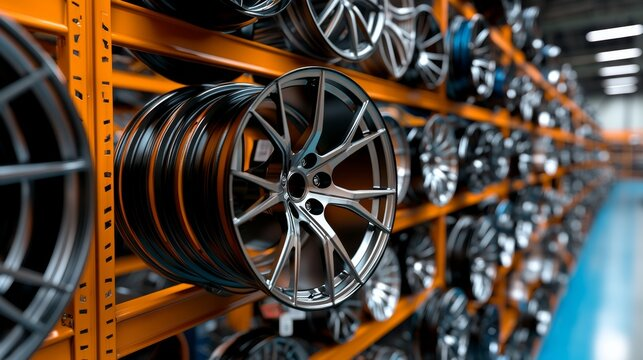
You buy from available stock across different sizes, styles and finishes. Once availability and order details are confirmed, standard stock items can ship within 24 hours.
The Advantages
Fast cash turnover. Your money isn’t tied up waiting for production. You buy, you sell, you reorder. The cycle is tight.
Lower capital requirement. For stock items, the MOQ starts from 20 pieces mixed. Custom cast orders start from 100 pieces per design, while forged orders can start from 4 pieces. This lets buyers test demand before committing to a larger production plan.
Flexibility to test. Want to try a new 20-inch forged design in your market? Stock-based sourcing lets you buy a small batch and see how customers respond before committing to larger volumes.
Reduced risk of dead stock. If a design doesn’t sell well, you haven’t overinvested. You can pivot quickly to what’s working.
The Trade-Offs
You’re limited to what’s available in stock. If you need a specific offset, PCD, or custom finish that isn’t currently available, you may need to wait or find another source.
What You Need from a Supplier
For stock-based sourcing to work, your supplier needs:
- Large inventory depth — not just a few hundred wheels, but tens of thousands across multiple sizes and styles
- Accurate, real-time stock information — you need to know what’s actually available before placing orders
- Fast fulfillment — standard stock items can ship within 24 hours after availability and order details are confirmed
- Low MOQs — stock items should be available in small quantities
Some suppliers can handle this. Many can’t. If you’re running a stock-based model, inventory depth and fulfillment speed are non-negotiable.
Wheel Wholesaler Ordering Models: Model 2 — Production-Based Sourcing (Custom Specs, Brand Control)
Who Uses This Model?
- Large wholesalers with established customer bases
- Brand owners who want their logo, packaging, and specific designs
- Businesses serving niche markets with specialized requirements (specific offsets, PCD patterns, or finishes)
- Buyers with stable demand who can forecast and plan orders months ahead
How It Works
In this model, you place a production order with specific requirements — size, design, finish, offset, PCD, branding, packaging. The supplier manufactures to your specs. You wait for production, then receive the order.
The Advantages
Complete control over specifications. You get exactly what you want — the right offsets for your market, the right finishes, the right branding.
Brand consistency. Your wheels carry your identity. Customers recognize your products. You’re not just reselling generic wheels; you’re building a brand.
Predictable supply. Once you establish a production relationship and forecast demand, you can plan orders with confidence.
Potential cost advantages at scale. Large production runs can reduce per-unit costs, especially if you’re ordering the same designs repeatedly.
The Trade-Offs
Longer lead times. Production takes time — typically weeks, not days. You need to plan ahead and maintain buffer stock to cover demand during production cycles.
Higher capital commitment. Production orders usually require larger quantities and upfront payment. Your cash is tied up until the order arrives and sells.
Less flexibility to pivot. If market preferences shift, you’re committed to what you’ve ordered. You can’t easily switch designs or sizes mid-cycle.
Higher risk of dead stock. If demand forecasts are wrong, you’re stuck with inventory that doesn’t move.
What You Need from a Supplier
For production-based sourcing to work, your supplier needs:
- Reliable production partners — certified facilities with proven quality control
- Clear communication — you need to specify requirements precisely and trust the supplier to execute
- Quality assurance — you’re not inspecting production in person, so you need documentation and testing reports
- Consistent lead times — production orders should arrive on schedule, not drift into delays
This model works well for established businesses with stable demand and the ability to plan ahead.
Wheel Wholesaler Ordering Models: Model 3 — Hybrid Sourcing (The Best of Both Worlds)
Who Uses This Model?
- Mid-size to large wholesalers with diverse customer bases
- Businesses serving multiple markets with different requirements
- Smart operators who’ve learned to balance flexibility and efficiency
- Companies that have outgrown pure stock or pure production models
How It Works
Put simply, you use stock for some orders and production for others, depending on the situation.
Stock for:
– Fast-moving popular sizes and styles
– Emergency replenishment when demand spikes unexpectedly
– Testing new designs before committing to production
– Small orders that don’t justify a full production run
Production for:
– Custom specifications your market demands
– Branded wheels with your logo and packaging
– Large, predictable orders where you can plan ahead
– Designs that aren’t available in stock
The Advantages
Maximum flexibility. You can respond quickly to market changes while maintaining control over your core product line.
Optimized cash flow. You’re not tying up all your capital in large production orders, but you also have the production capability when you need it.
Reduced risk. If a stock design stops selling, you haven’t overinvested. If a production order faces delays, you have stock wheels to cover demand.
Customer satisfaction. You can fulfill urgent orders from stock while working on larger custom orders in parallel.
The Trade-Offs
Requires more sophisticated inventory management. You need to track stock levels, forecast demand, and coordinate production schedules.
May require higher total capital. You’re maintaining both stock inventory and production orders simultaneously.
Demands a flexible supplier. Not every supplier can support both modes effectively.
What You Need from a Supplier
For hybrid sourcing to work, your supplier needs:
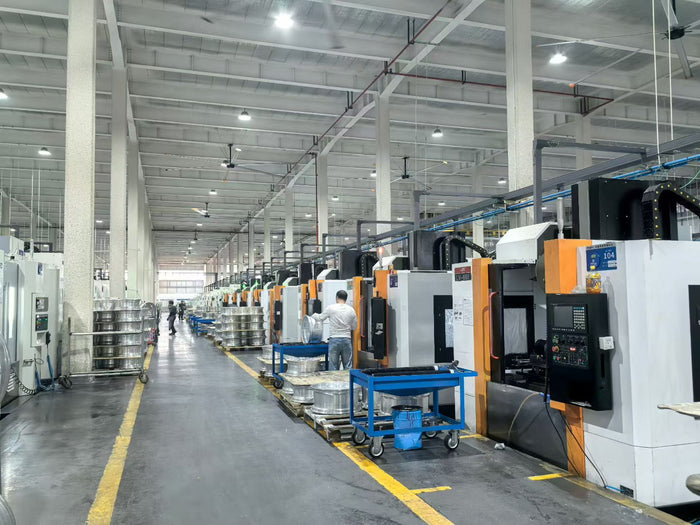
- Both stock inventory AND production capability — not just one or the other
- Clear MOQ policy — state the minimum for stock and production orders
- Fast stock fulfillment — for urgent orders and replenishment
- Confirmed production timelines — for your planned production orders
- Clear communication — so you know what’s in stock, what’s available, and when production will ship
This model offers the most flexibility, but it requires a supplier who can genuinely support both approaches.
How to Choose the Right Model for Your Business
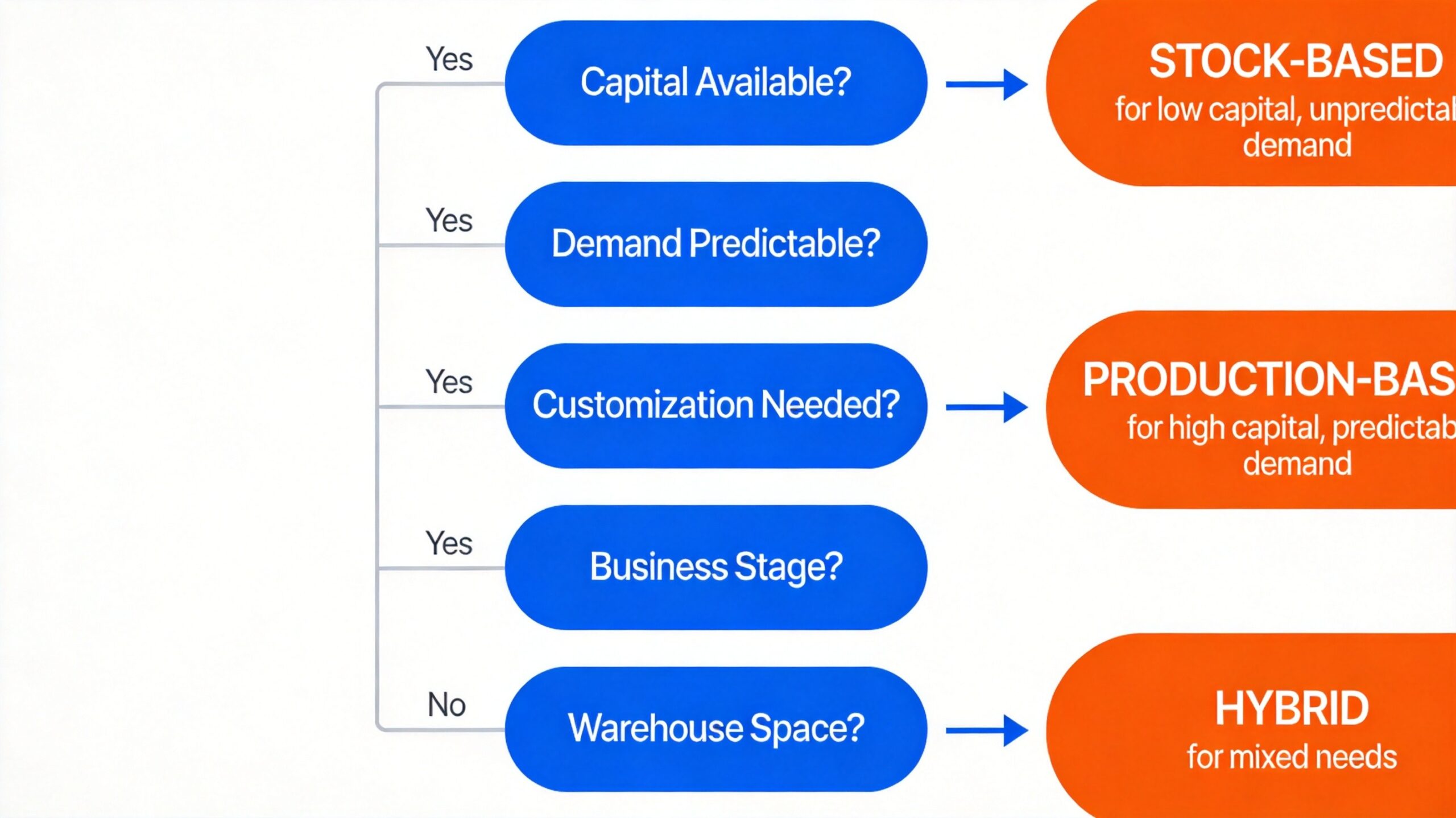
There’s no “best” among these wheel wholesaler ordering models. It depends on your specific situation.
Ask Yourself These Questions:
1. What’s your capital availability?
– Limited → Stock-based model
– Moderate to high → Production or hybrid model
2. How predictable is your demand?
– Unpredictable or seasonal → Stock-based model
– Predictable and stable → Production model
– Mix of both → Hybrid model
3. How much customization do you need?
– Minimal, standard specs work → Stock-based model
– Heavy customization required → Production model
– Some standard, some custom → Hybrid model
4. What’s your stage of business?
– New or testing → Stock-based model
– Established with stable customers → Production model
– Growing, serving diverse markets → Hybrid model
5. How much warehouse space do you have?
– Limited → Stock-based model (buy only what you need)
– Ample → Production model (buffer stock while waiting for production)
The Reality: Most Successful Wholesalers Use Hybrid
In practice, many wholesalers start with stock-based sourcing to test demand and build cash flow, then add production orders for core products as their market becomes more predictable. They start with stock-based sourcing to test the market and build cash flow. As they grow and understand their market better, they add production orders for their core products.
The key is finding a supplier who can support you at every stage — whether you’re replenishing stock today or planning a larger production order for the next stage of your business.
What Wholesalers Should Look for in a Supplier
Regardless of which model you choose, certain supplier characteristics matter:
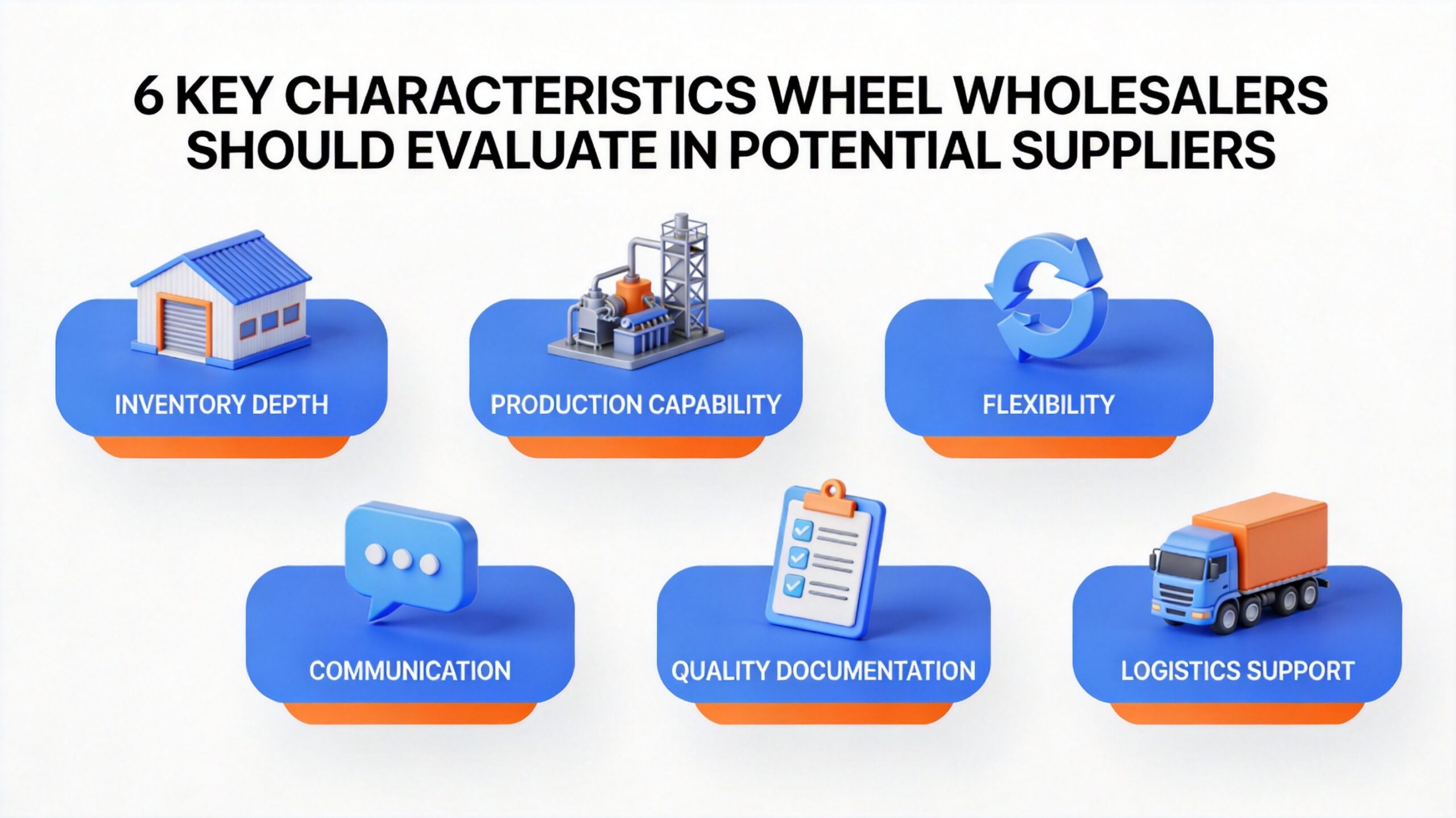
1. Inventory Depth and Accuracy
If you’re buying stock, the supplier needs substantial inventory — not just a catalog listing. You need to know what’s actually available, in what quantities, and where it’s located.
2. Production Capability
If you’re placing production orders, the supplier needs reliable, certified production partners. Ask about their quality control processes, testing equipment, and JWL / VIA certification details. See our certification guide for what each mark means.
3. Flexibility
The best suppliers can handle both stock orders and production orders. They’re willing to work with small quantities for stock items and large quantities for production runs. They understand that your needs may change, and they can adapt.
4. Communication and Transparency
You need clear, honest communication. How much is actually in stock? When will production ship? What’s included in the price? A good supplier gives you straight answers, not vague promises.
5. Quality Documentation
Whether you’re buying stock or production, you need complete certification documentation — material certificates, test reports, batch traceability. This protects you and your customers.
6. Logistics Support
Shipping wheels internationally involves freight, customs, documentation. A good supplier helps you navigate this — clear shipping documents and agreed Incoterms.
Frequently Asked Questions
Can I start with stock orders and move to production orders later?
Absolutely. Many successful wholesalers start with stock-based sourcing to test their market and build cash flow. Once they understand what sells, they add production orders for their core products. The key is finding a supplier who can support both models.
What MOQ should I expect for stock vs production orders?
For stock items, the MOQ starts from 20 pieces mixed. Custom cast orders start from 100 pieces per design, while forged orders can start from 4 pieces. Custom production lead time is 30–45 days after deposit. Confirm the final MOQ and schedule for the exact design, finish and specifications before ordering.
How do I know if a supplier can really handle both stock and production?
Ask specific questions: “How many pieces do you have in stock right now?” “Can you show me real-time inventory?” “What’s your production lead time?” “Can you arrange a factory visit?” A supplier who can genuinely support both modes will answer confidently.
Is hybrid sourcing more expensive than pure stock or pure production?
Not necessarily. Hybrid sourcing optimizes your cash flow and reduces risk. You’re not tying up all your capital in large production orders, but you also have production capability when you need it. The flexibility itself has value — it lets you respond to market changes and avoid dead stock.
What if my market demands change suddenly?
If you’re using a hybrid model, you can respond quickly. For urgent demand spikes, pull from stock. For sustained demand increases, add production orders. If demand drops, you haven’t overcommitted to production, so you’re not stuck with unsold inventory.
How HolyWheel Supports All Three Models
With 17+ years in the wheel industry, we understand that different wholesalers have different needs and that sourcing requirements change as a business grows.
Here’s how we support each model:
For Stock-Based Sourcing
- 40,000+ wheels in stock at our Guangzhou base — various sizes, styles, finishes
- Stock availability — confirm availability for the relevant design and specification before ordering
- Low MOQs — stock items from 20 pieces mixed; forged orders from 4 pieces
- Fast fulfillment — standard stock items can ship within 24 hours after availability and order details are confirmed
For Production-Based Sourcing
- Certified production partners — we work with partners whose JWL / VIA certification details can be confirmed for the relevant product and order
- Complete specification control — size, design, finish, offset, PCD, branding, packaging
- Product documentation — confirm the documentation available for the relevant order
- Production schedules — confirm timing for the relevant order
For Hybrid Sourcing
- Both stock inventory AND production capability — we support both modes
- Flexible order planning — stock items from 20 pieces mixed; custom cast from 100 pieces/design; forged from 4 pieces
- Seamless coordination — we help you balance stock and production based on your needs
- Transparent communication — you always know what’s in stock and when production will ship
We’re not the biggest supplier in the industry, and we don’t claim to be the cheapest. What we do is work with our customers over the long term, understanding their needs and adapting as their business grows.
Many of our customers started with small stock orders, moved to hybrid sourcing, and now place regular production orders alongside their stock purchases. They’ve grown their business, and we’ve grown with them.
Next Steps: Let’s Talk About Your Sourcing Model
If you’re trying to figure out which sourcing model fits your business, or if you’re looking for a supplier who can support your needs flexibly, let’s have a conversation.
We can discuss:
– What sizes and styles are selling in your market
– Whether stock, production, or hybrid makes sense for your situation
– What MOQs and timelines look like for your specific needs
– How we can support you as your business grows
📧 info@holywheel.com | 📱 WhatsApp: +86 189 2873 1511
Learn more about who we are and how we work — 17+ years of alloy wheel industry experience, based in Guangzhou, serving B2B buyers worldwide.