

Alloy Wheel Blog | Industry Insights & B2B Sourcing Guides | Holywheel
Alloy Wheel Certification Guide: JWL, VIA, TÜV, DOT (2026)

Alloy Wheel Certification Guide: JWL, VIA, TÜV, DOT Explained (2026 Update)
After 20 years of shipping alloy wheels to distributors across the Middle East, I’ve put together this alloy wheel certification guide because, South America, Africa, and Europe, I can tell you this: certifications are the single biggest thing that separates a smooth shipment from a nightmare.
I’ve seen containers sit at port for weeks because customs couldn’t verify the wheel marks. Customers have lost deals because buyers demanded a TÜV certificate they didn’t have. And I’ve watched competitors get shut down because they faked a JWL sticker on wheels that never passed a real test.
This alloy wheel certification guide breaks down exactly what each certification means, where you need it, and how to spot a fake. Whether you’re importing forged wheels wholesale or stocking cast alloy wheels in bulk, you need to understand these marks inside and out.
Why This Alloy Wheel Certification Guide Matters for Wholesale Buyers
Before we get into the specifics, however, here’s what’s actually at stake.
Customs clearance. Countries won’t let alloy wheels through port without proper certification stamps AND matching paperwork. No JWL mark? Japan won’t touch it. No TÜV docs? Forget selling into Germany.
Buyer trust. When a customer sees a clean JWL or TÜV mark, they know it’s been tested. That mark sells for you.
Legal liability. If a wheel cracks at highway speed and someone gets hurt, investigators check certification first. Selling uncertified wheels as “certified” means lawsuits, fines, and potential criminal charges.
Three things hang on certification: customs clearance, buyer trust, and legal protection. Skip any one of them and you’re exposed.
JWL Certification: The Japanese Standard
JWL stands for “Japan Light Alloy Wheel.” It’s the certification standard set by Japan’s Ministry of Land, Infrastructure, Transport and Tourism (MLIT) for passenger car alloy wheels. There’s also JWL-T for truck and bus wheels.
What JWL Tests For
JWL certification requires wheels to pass three core tests:
- Rotating bending fatigue test — simulates cornering loads over thousands of cycles
- Radial load durability test — simulates the weight of the vehicle plus dynamic loads
- Impact test — a single heavy hit to check for cracking or deformation
Importantly, each test has specific load values based on wheel size, load rating, and intended vehicle type. The standards are detailed in MLIT’s “Technical Standards for Light Alloy Disc Wheels for Passenger Cars.”
Where You Need JWL
- Japan — mandatory for all alloy wheels sold domestically
- Southeast Asia — widely accepted in Thailand, Indonesia, Malaysia
- Middle East — many buyers in the UAE and Saudi Arabia specifically request JWL-certified wheels because they trust the standard
- As a baseline quality indicator — even in markets that don’t require it, JWL is one of the most recognized marks in the wholesale wheel trade
At HolyWheel, every wheel in our 40,000+ piece stock inventory is sourced from production partners who hold JWL certification. We’ve made this standard a core part of our sourcing process from day one — it’s not something we treat as an afterthought.
For official JWL standard details, you can reference the Japan Light Alloy Wheel Testing Council (JWTC).
VIA Certification: The Japanese Verification Standard
VIA stands for “Vehicle Inspection Association.” It’s the third-party registration system that verifies aftermarket wheels actually meet JWL standards. Think of it this way: JWL is the technical standard, and VIA is the independent body that confirms a specific wheel model actually passed those tests.
How VIA Works
Specifically, the process goes like this:
- A production partner submits test reports and wheel samples to JWTC
- JWTC conducts confirmation tests — rotating bending fatigue, radial load durability, and impact — on actual samples
- Once passed, the wheel design gets registered in the VIA database
- The wheel can then carry the VIA mark alongside the JWL mark
Interestingly, here’s a detail most people miss: if one size in a registered family fails a surveillance test, the entire family loses registration. Every related size has to go through all three tests from scratch. That keeps the system honest.
Where You Need VIA
- Japan — required for aftermarket wheels (JWL is the self-certification standard; VIA is the independent verification that buyers and regulators look for)
- United States — many American wheel shops and distributors recognize VIA as a trusted quality mark, even though it’s not legally required
- Australia and New Zealand — commonly accepted as proof of wheel safety
- Premium markets globally — buyers who care about quality will ask for VIA
Certification documentation from our production partners is available for any wholesale order. Just ask and we’ll send you the VIA registration details for whatever wheel size you’re ordering.
TÜV Certification: The European Gatekeeper
If you’re selling into Europe, TÜV is non-negotiable. This is the certification that keeps customs happy and keeps you out of court.
What TÜV Covers
TÜV (Technischer Überwachungsverein) is, in essence, a German technical inspection body. The key standards for alloy wheels in 2026:
- ECE R124 — UN regulation for replacement wheels, covering structural integrity and dimensional accuracy
- StVZO — Germany’s national requirements, often stricter than ECE R124
- National type approvals — individual countries may add local requirements (Italy’s NAD decree, for example)
TÜV testing includes:
- Bending fatigue test (rotating bending)
- Rolling test (radial load durability)
- Impact test (13° impact or drop test)
- Corrosion resistance test
- Dimensional accuracy verification
- Material analysis
TÜV SÜD and TÜV Rheinland are the two main bodies handling wheel certifications. Both have been doing this for over 40 years.
Where You Need TÜV
- Germany — absolutely mandatory; without a TÜV parts report (Teilegutachten), you cannot legally sell aftermarket wheels
- Austria, Switzerland — same requirements as Germany
- European Union broadly — ECE R124 certification through TÜV is accepted across most EU member states
- Middle East — Saudi Arabia and UAE increasingly request TÜV documentation for high-end wheel imports
- South Africa — many importers prefer TÜV-certified wheels for liability reasons
Last year, a client in Hamburg almost lost an 800-piece forged wheel order because TÜV paperwork wasn’t ready before loading. We got the test reports from our production partners within 48 hours and saved the deal. Other suppliers without TÜV connections lose those deals permanently.
For official TÜV wheel testing information, check TÜV Rheinland’s wheel testing page or TÜV SÜD’s wheel services.
DOT / SAE Certification: The American Standard
DOT stands for “Department of Transportation.” In the wheel and tire world, DOT certification primarily applies to tires rather than the wheels themselves — but understanding the difference matters for wholesale buyers.
What DOT Means for Wheels and Tires
The DOT mark on a tire certifies it meets Federal Motor Vehicle Safety Standards (FMVSS) set by NHTSA, including FMVSS 109 (passenger car tires), 119 (other vehicles), and 120 (tire and rim selection).
For the wheel/rim itself, the U.S. doesn’t have a single mandatory certification mark like JWL or TÜV. Instead, wheel producers typically follow SAE J2530 (Aftermarket Wheel/Rim — Passenger Cars and Light Trucks) standards, which cover:
- Structural fatigue testing (cornering fatigue and radial fatigue)
- Impact testing
- Material specifications
Many American buyers will ask for “DOT-compliant” wheels, which really means wheels that meet SAE standards and are compatible with DOT-certified tires.
Where DOT/SAE Matters
- United States — SAE compliance expected; DOT marking required on tires
- Canada — follows similar standards to the U.S.
- Mexico — increasingly aligned with North American standards
- Latin America — Brazilian and Colombian buyers often request DOT-compatible wheels because they sell to U.S.-aligned markets
For official DOT tire standards, you can reference the NHTSA FMVSS regulations.
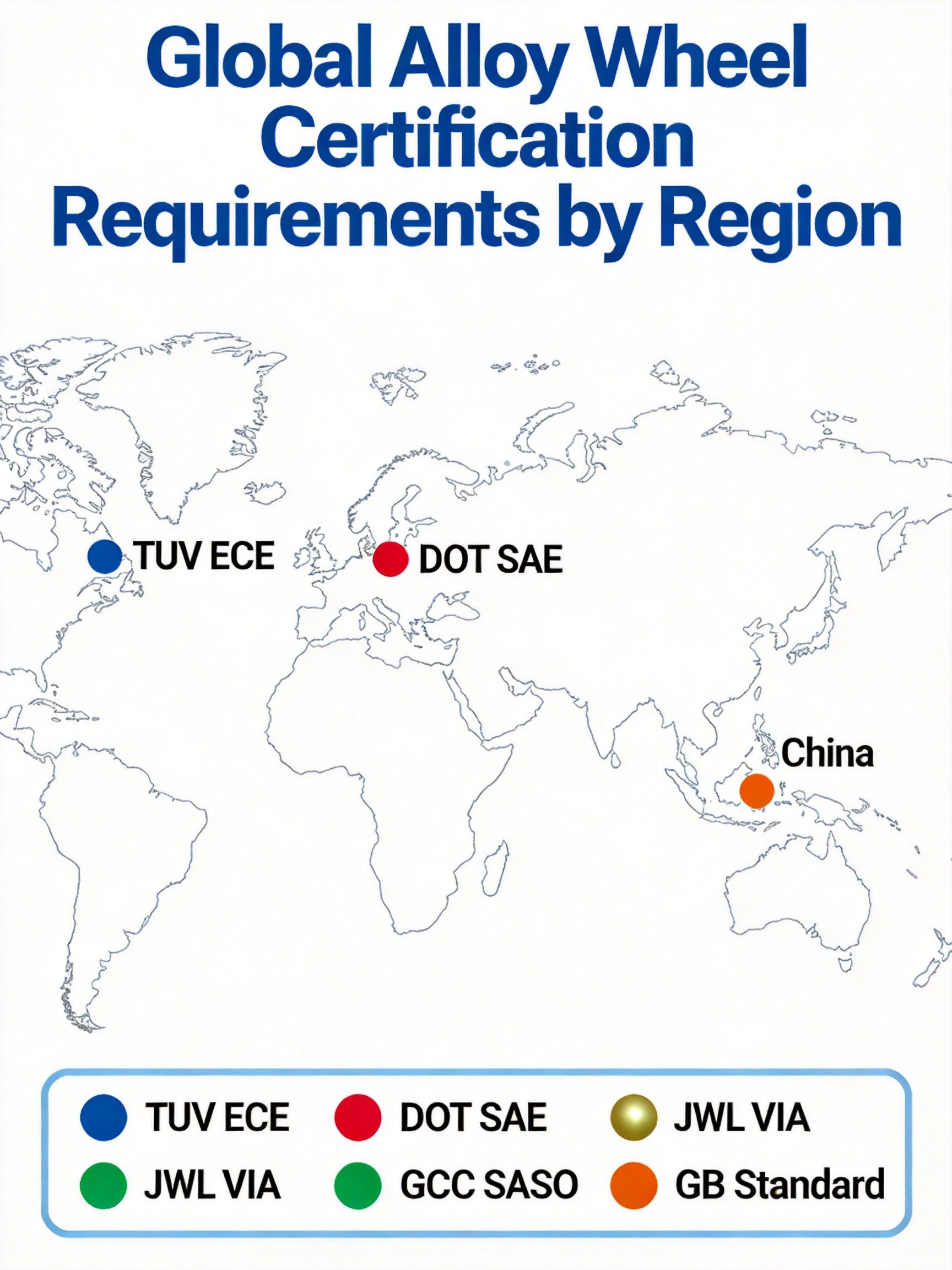
Certification Requirements by Market: Quick Comparison Table
Here’s a practical breakdown of what certifications you need based on where you’re selling in 2026:
| Market | Primary Certification | Secondary / Recommended | Notes |
|---|---|---|---|
| Japan | JWL + VIA | — | Both marks required on wheel face; VIA registration mandatory for aftermarket |
| Germany / DACH | TÜV (ECE R124) | StVZO parts report | No TÜV means no legal sale; in fact, buyers will check the database |
| Rest of EU | TÜV / ECE R124 | National type approval | Most countries accept ECE R124; some have additional local requirements |
| United States | SAE J2530 | DOT-compatible | No single mandatory wheel mark; SAE is industry standard |
| Middle East (UAE, Saudi) | JWL preferred | TÜV for premium segment | SASO in Saudi Arabia may require additional testing |
| South America (Brazil) | INMETRO (for tires) | SAE / JWL for wheels | INMETRO is mandatory for tires; wheels need load rating documentation |
| South America (Colombia, Chile) | JWL or SAE | TÜV if selling to premium shops | Less regulated than EU; buyer preference drives requirements |
| Africa (Nigeria, Ghana, Kenya) | No strict legal requirement | JWL strongly preferred | Buyers use JWL as trust signal; fake marks are a known problem |
| Australia / New Zealand | VIA preferred | JWL accepted | Strict consumer safety laws; poor quality wheels get recalled fast |
How to Verify Your Supplier’s Certifications: 5 Steps
Unfortunately, the alloy wheel wholesale market has a serious fake certificate problem. I’ve seen photoshopped certificates, stolen certificates, and completely fabricated ones. Here’s how to protect yourself:
Step 1: Check the VIA Database Directly
The JWTC maintains a registration database for VIA-certified wheels. Ask your supplier for the VIA registration number and wheel size, then cross-reference it. If it’s not in the database, it’s not certified. Period.
Step 2: Verify TÜV Certificate Numbers
Every legitimate TÜV certificate has a unique number. You can contact TÜV Rheinland or TÜV SÜD directly with the certificate number and they will confirm whether it’s valid, what wheel sizes it covers, and whether it’s still active. TÜV certificates expire and need renewal.
Step 3: Ask for Test Reports, Not Just Certificates
In practice, a real supplier will provide detailed test reports showing actual test data — load values, cycle counts, pass/fail results for each test type. If your supplier can only show you a pretty certificate with no supporting data, be suspicious.
Step 4: Request a Third-Party Inspection
For large orders, hire an independent inspector (SGS, Bureau Veritas, Intertek) to verify wheel quality at loading. A few hundred dollars can save you tens of thousands.
Step 5: Visit or Video-Call the Facility
A legitimate operation will, without hesitation, show you their test equipment — the bending fatigue machine, the impact tester, the measurement lab. No test equipment? That’s a red flag.
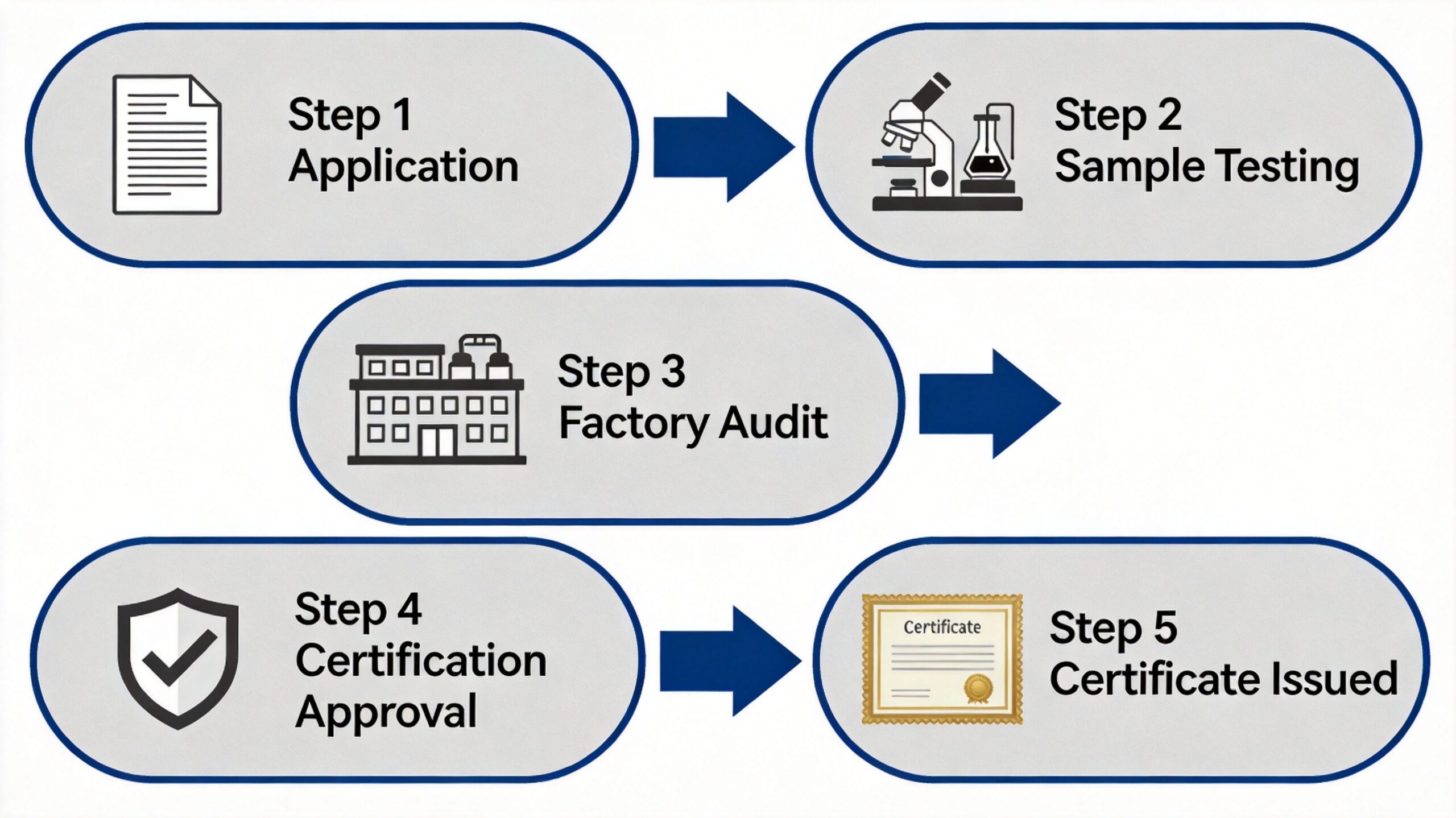
Certifications Held by Our Production Partners
Here’s what HolyWheel carries:
- JWL certified — all wheel sizes in our core stock range, certified by our production partners
- VIA registered — our production partners maintain active VIA registration through JWTC
- TÜV tested — ECE R124 compliance documentation available for European market orders
- DOT/SAE compatible — wheels meet SAE J2530 structural standards for the North American market
- SFI certified — for motorsport and performance applications, certified by our production partners
Every certification document from our production partners is available upon request. We don’t hide behind vague claims — place an order and we’ll send you actual test reports and certificate copies for your customs, buyer, and due diligence records.
You can also see more on our About Us page.
Frequently Asked Questions
What is the most important alloy wheel certification for wholesale buyers?
It depends on your target market. For Europe, for instance, TÜV (ECE R124) is non-negotiable. For Japan and Southeast Asia, JWL + VIA is the standard. For the US, SAE J2530 compliance is expected. If you sell across multiple regions, JWL is the most universally recognized baseline certification.
How do I know if a wheel certification is fake?
Check the VIA database for JWL/VIA marks, contact TÜV directly with the certificate number for European marks, and ask for full test reports with specific data points (load values, cycle counts). Legitimate suppliers provide traceable documentation. Read our detailed verification guide above.
Do I need TÜV certification to sell wheels in the Middle East?
Legally, TÜV is not mandatory in most Middle East countries. But practically, serious buyers in the UAE and Saudi Arabia expect TÜV documentation — especially for premium forged wheels. It’s a trust signal that separates serious suppliers from fly-by-night operators.
What’s the difference between JWL and VIA certification?
In other words, JWL is the technical standard (the rules the wheel must pass). VIA is the independent third-party verification system that confirms a specific wheel model actually met those rules. Think of JWL as the exam, and VIA as the proctor who makes sure the exam was taken honestly.
Is certification worth the extra cost?
Certification adds a small percentage to per-wheel cost. The testing, documentation, and registration fees get amortized across production volumes. Compare that to the cost of a seized container at customs or a product liability lawsuit — the certification cost is cheap insurance.
Get Wheels from Certified Production Partners Today
Armed with this alloy wheel certification guide, you are now ready to stock certified wheels that clear customs and satisfy your buyers? Contact our team with your size requirements and target market — we’ll send you the right product recommendations along with full certification documentation — exactly what this alloy wheel certification guide advocates.
👉 GET A QUOTE — Certification Documents Included
📧 info@holywheel.com | 📱 WhatsApp: +86 189 2873 1511
SEO Metadata Summary
- Title Tag (56 chars): Alloy Wheel Certification Guide: JWL, VIA, TÜV, DOT (2026)
- Meta Description (152 chars): Alloy wheel certification guide 2026: JWL, VIA, TÜV, and DOT explained for wholesale buyers. Learn what each mark means, which markets require them, and how to verify.
- Focus Keyphrase: alloy wheel certification
- Secondary Keywords: alloy wheel JWL certification, TUV wheel certification, DOT wheel standards, VIA wheel registration
- Long-tail Keywords: how to verify alloy wheel certifications, which wheel certification do I need for Middle East, TUV vs JWL wheel certification, alloy wheel certification for wholesale buyers
- LSI Keywords: wheel safety standards, ECE R124, SAE J2530, wheel testing, wheel type approval, structural fatigue test, wheel quality marks
- Slug: alloy-wheel-certification-guide-jwl-via-tuv-dot-explained
- Word Count: ~2,200
Internal Links (5+)
| Anchor Text | Target URL |
|---|---|
| forged wheels wholesale | https://www.holywheel.com/product-category/forged-wheel/ |
| cast alloy wheels in bulk | https://www.holywheel.com/product-category/replica-wheel/ |
| About Us / certification documentation | https://www.holywheel.com/about-us/ |
| Contact Us / GET A QUOTE | https://www.holywheel.com/contact-us/ |
| detailed verification guide | (anchor link within page) |
External Links (Authority Sources)
| Anchor Text | Target URL | Source Authority |
|---|---|---|
| Japan Light Alloy Wheel Testing Council (JWTC) | https://www.jwtc.jp/open/html/e/gaiyou.html | Official Japanese wheel certification body |
| TÜV Rheinland wheel testing | https://www.tuv.com/luxembourg/en/type-testing-wheels-and-tires.html | Official European testing body |
| TÜV SÜD wheel services | https://www.tuvsud.com/de-de/… | Official European testing body |
| NHTSA FMVSS regulations | https://www.govinfo.gov/content/pkg/CFR-2022-title49-vol6/… | US government safety standards |
Image Requirements
| Position | Type | Description | Alt Tag |
|---|---|---|---|
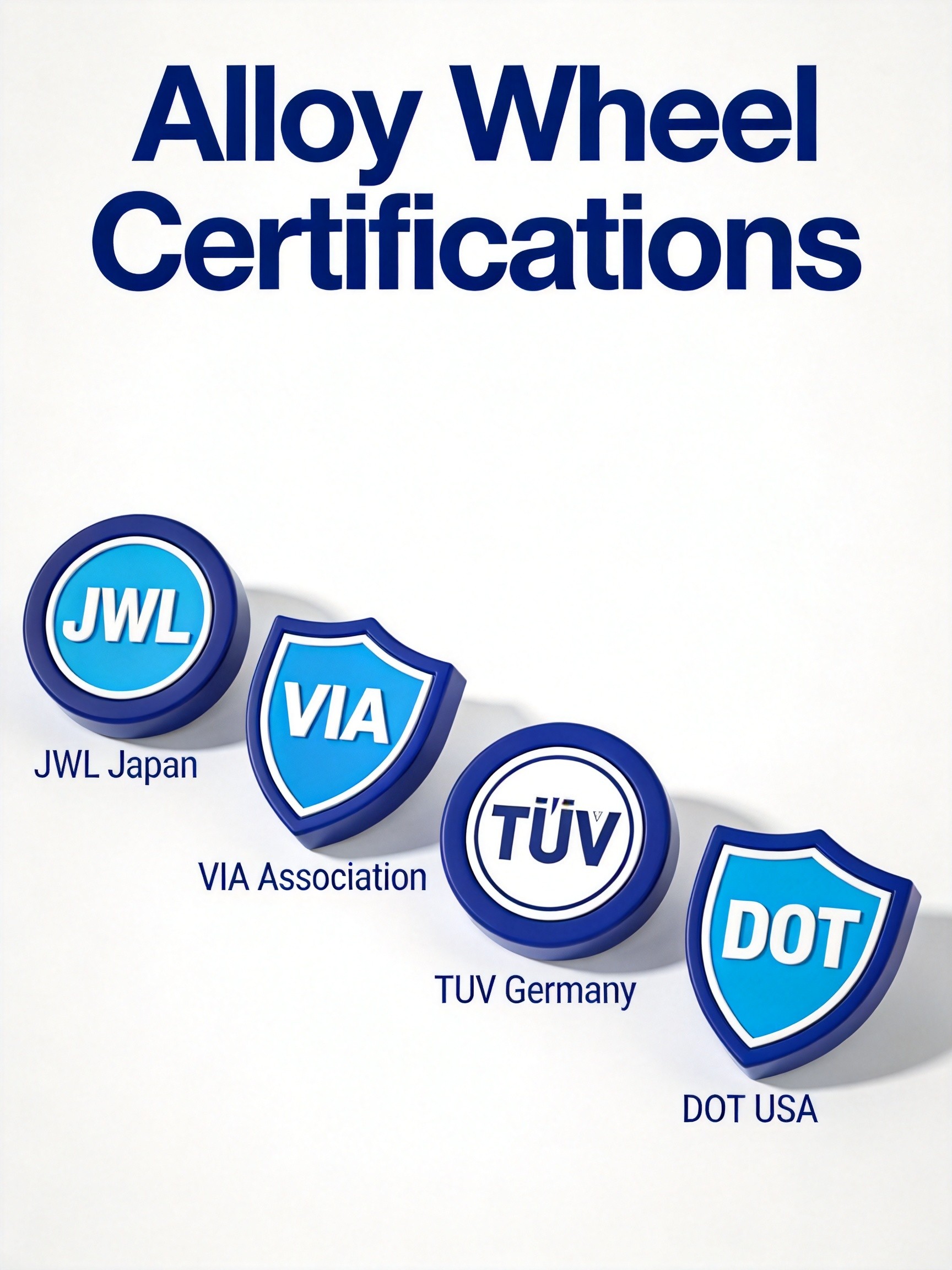
| After intro section | Comparison chart | All 4 certification marks (JWL, VIA, TÜV, DOT) with key specs side by side | “Alloy wheel certification marks comparison chart JWL VIA TÜV DOT for wholesale buyers” |
| In TÜV section | Flowchart | TÜV testing process showing 6 test steps from material analysis to certification | “TÜV alloy wheel certification testing process flowchart with 6 key test steps” |
| In verification section | Infographic | 5-step verification process checklist with icons | “How to verify alloy wheel supplier certifications — 5-step checklist infographic” |