

Alloy Wheel Blog | Industry Insights & B2B Sourcing Guides | Holywheel
Forged vs Cast Alloy Wheels: Wholesale Buyer’s Guide 2026

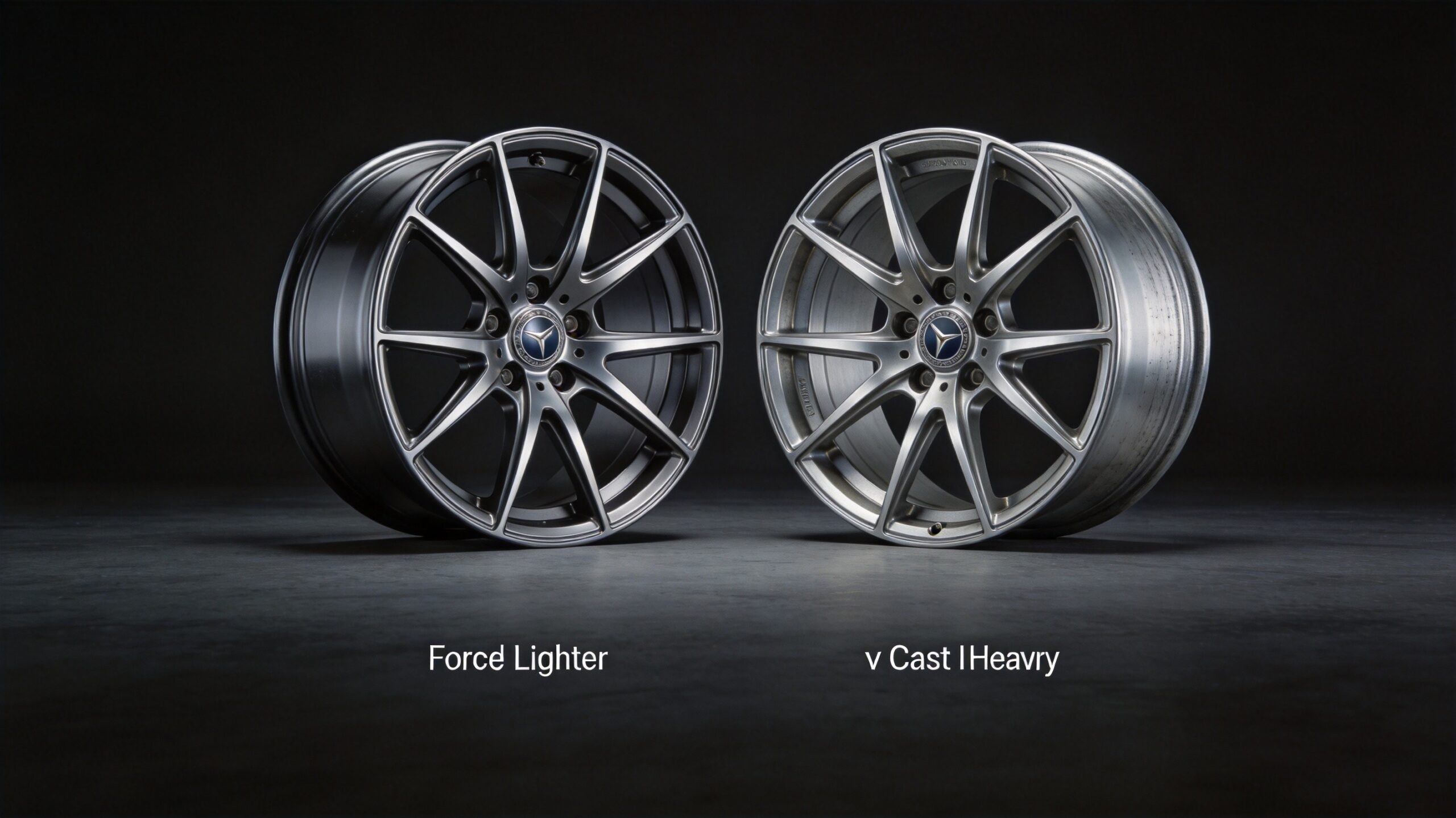
Forged vs Cast Alloy Wheels: A Wholesale Buyer’s Complete Guide (2026)
The Question Every Wholesale Buyer Asks Me
Every week, I get the same question from new buyers about forged vs cast alloy wheels:
“Should I stock forged wheels or cast wheels? What sells better in my market?”
I get it. After all, I’ve been in this business for 20 years. When I first started selling alloy wheels to overseas buyers, I made the same mistakes. I loaded up a container full of forged rims for a West African market — and they sat on shelves for months. The price was too high for local customers. The buyers wanted something affordable that looked good.
On the other hand, I’ve seen Middle Eastern shop owners print money selling forged wheels because their customers demand that performance edge.
The truth? In reality, neither option is “better” across the board. It depends on your market, your customers, and your margins.
Here’s the short version: if you’re sourcing forged wheels wholesale for the US, Europe, or Middle East, the margins are enormous but volumes run lower. If you need cast alloy wheels in bulk for Africa, Southeast Asia, or Latin America, you win on volume at accessible prices. By the end of this guide, you’ll know exactly which type fits your business — and why.
What Are Cast Alloy Wheels? The Process, the Pros, the Real Talk
How Cast Alloy Wheels Are Made
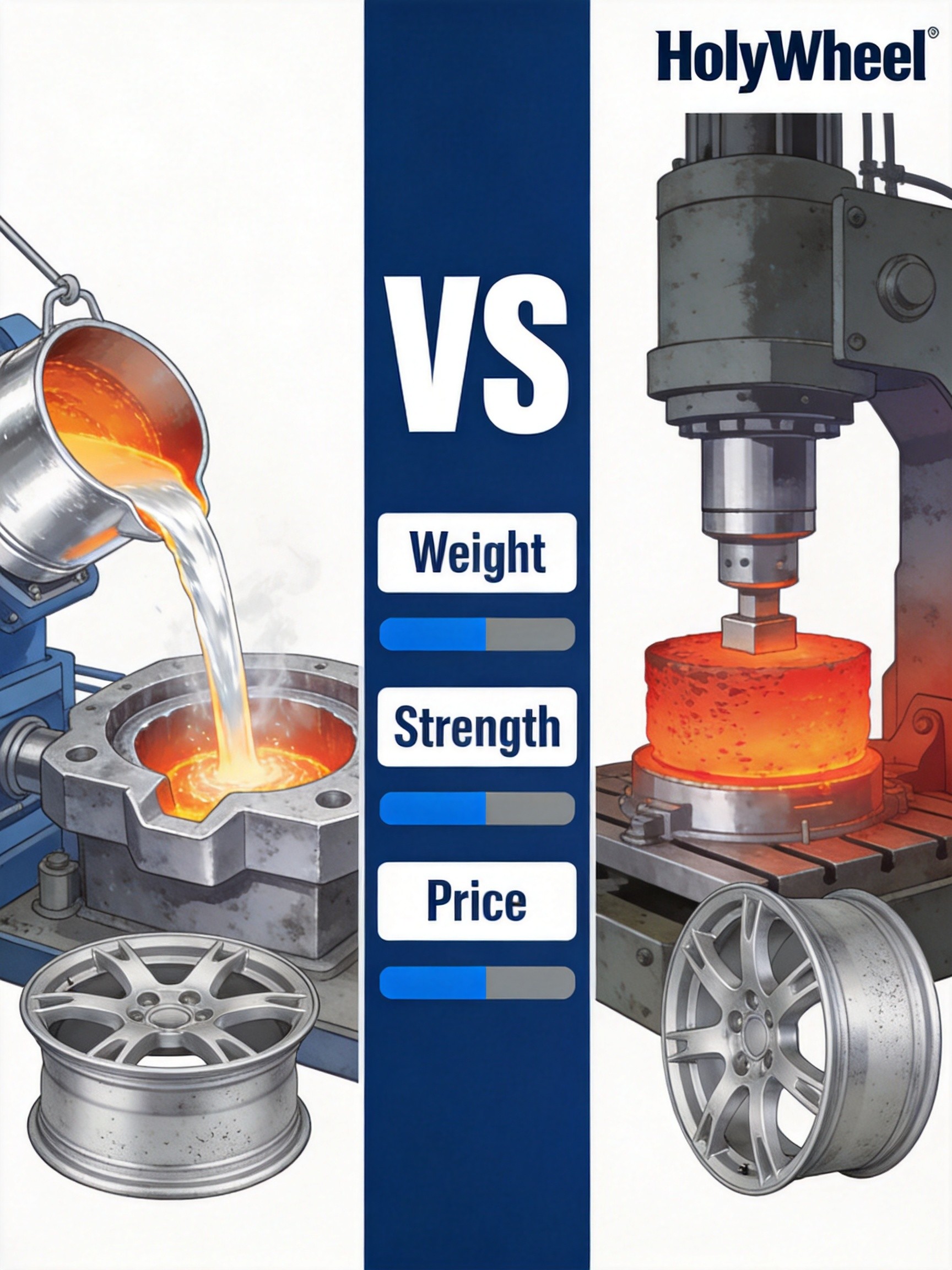
To start with, cast alloy wheels begin with molten aluminum. The liquid metal gets poured into a mold — think of it like pouring batter into a cake pan. Once it cools and solidifies, you get the wheel shape. After that, it goes through machining, drilling, and finishing.
That’s gravity casting, the most common method, in fact. Some suppliers use low-pressure casting, which gives slightly better density. Either way, the core idea is the same: liquid metal fills a mold.
In fact, according to the European Aluminium Association, cast wheels hold over 80% of the global market share in 2026. That number alone tells you something — they work, and they sell.
Why Wholesale Buyers Love Cast Alloy Wheels in Bulk
Price. Let’s be honest — this is the big one. Cast wheels typically run $35–$80 per piece at wholesale level (15–17 inch sizes). That’s a fraction of what forged wheels cost. Your retail customers can upgrade from steel to alloy without breaking the bank.
Design variety. Casting lets you pull off intricate spoke patterns. Flow-formed designs, mesh patterns, classic multi-spoke layouts — casting handles them all. If your customers care about looks first, cast wheels deliver.
Lower risk for testing new markets. For instance, got a new customer base? Start with cast alloy wheels in bulk. The investment is smaller, so you can test what sells before committing big money.
Where Cast Wheels Fall Short
That said, let me be upfront about the downsides:
- Heavier weight. Cast wheels are 25–35% heavier than forged equivalents. Your performance-minded customers will notice. Extra unsprung weight means slower turn-in and longer braking distances — stuff that matters on a track, less so on a commute.
- Impact vulnerability. Hit a deep pothole at speed? Cast wheels can crack. The grain structure has microscopic air pockets from the pouring process — and those become weak points under hard impact. I’ve processed warranty claims where a single curb strike split a cast wheel clean through.
- Lower resale value perception. Cast wheels are “good enough” for daily drivers. They don’t carry the premium badge that forged wheels do. Your customers who want to flex at car shows? They’ll reach for forged.
- Surface finish longevity. The paint or powder coat on cast wheels tends to chip and corrode faster than the anodized or brushed finishes you get on forged wheels. In humid or coastal markets, that matters.
Who Should Stock Cast Wheels?
- Wheel shops in developing markets (Africa, Southeast Asia, parts of South America)
- Dealers targeting daily drivers and fleet operators
- Anyone who needs volume sales at accessible price points
- Shops selling replica and OEM-style replacement wheels
What Are Forged Alloy Wheels? The Premium Choice Explained
How Forged Wheels Are Made
Here’s where things change completely, however. Forged wheels start as a solid block of 6061-T6 aluminum alloy. A 10,000-ton press smashes that billet into a rough disc shape. Then a CNC machine mills every spoke, every curve, every detail with surgical precision.
To put it simply, think of the difference like this: casting is like baking a cake from batter. Forging is like carving a sculpture from a solid block of marble.
The forging process compresses the aluminum grain structure tightly. No air pockets. No weak spots. What you get is a wheel that’s denser, stronger, and significantly lighter.
Why Forged Wheels Command Premium Prices
Wholesale pricing for forged wheels typically starts at $120–$200 per piece for standard designs, and custom or multi-piece forged wheels can reach $400–$800+ in 2026.
But here’s what matters to you as a buyer, importantly: the margins are enormous.
For example, a forged wheel that costs you $180 wholesale can easily retail for $450–$600. That’s a 150–230% markup. Compare that to cast wheels, where you’re fighting for 30–50% margins in competitive markets.
The Forged Wheel Advantage — What Your Customers Get
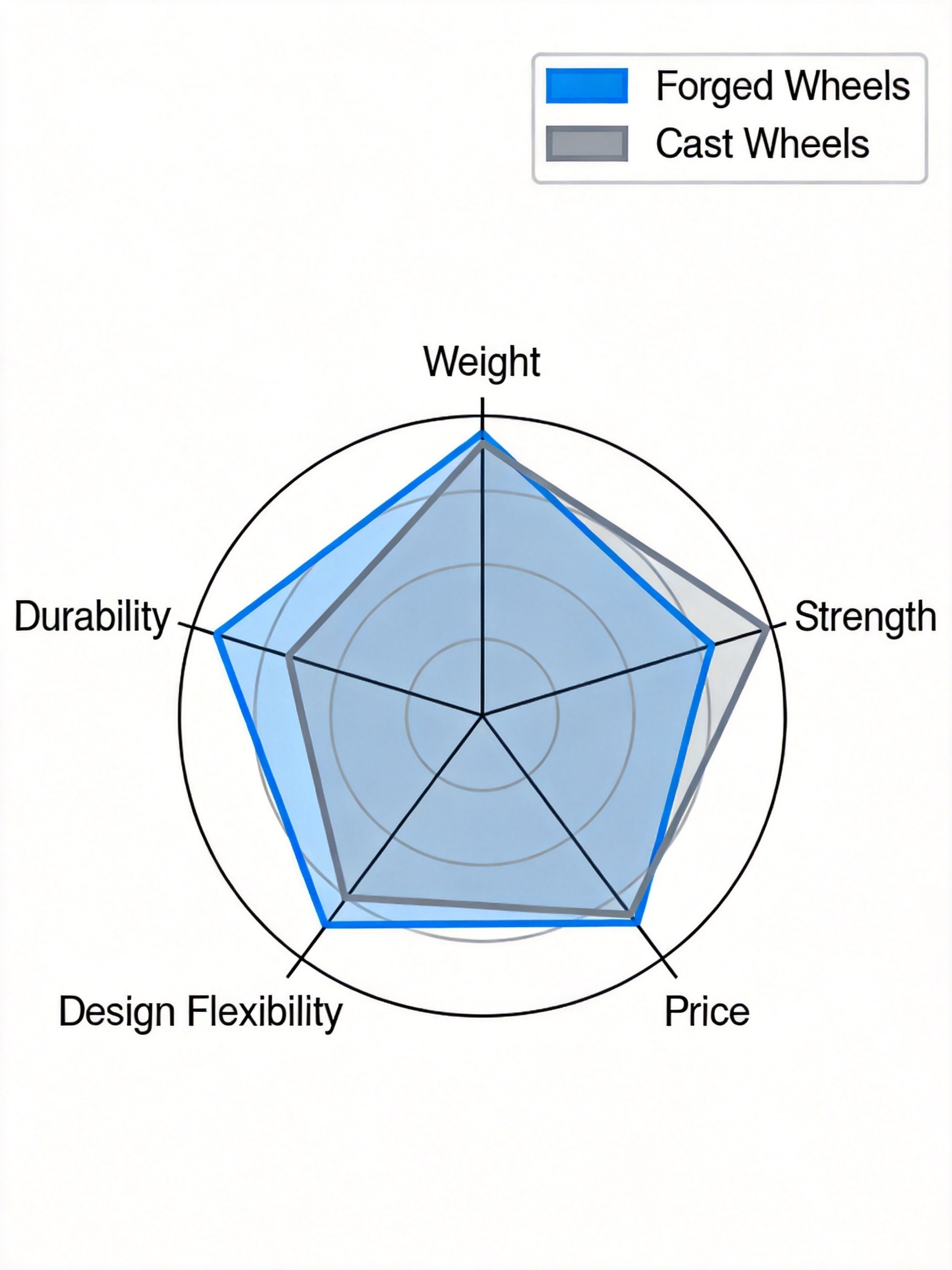
- Weight savings of 25–35% compared to cast. That means faster acceleration, shorter braking distances, better fuel economy, and less strain on suspension parts.
- Superior impact resistance. Forged wheels bend under extreme pressure instead of cracking. Wheel-size.com confirms forged construction handles curb impacts and pothole strikes far better than cast.
- Full customization. Offset, width, bolt pattern, center bore, finish — everything gets machined to spec. Your customers who want a perfect fit for their BMW, Porsche, or lifted truck? Forged wheels make it happen.
The Downsides — Let’s Keep It Real
- Higher upfront cost. No sugarcoating this. Your retail price will be higher. A set of 20-inch forged wheels for a BMW can cost your customer three times what a cast set would. You need to sell the value — the weight savings, the strength, the custom fitment — to justify that price tag.
- Longer lead times for custom orders. Stock items ship faster. Custom specs with specific offsets or finishes take longer. Plan your inventory accordingly.
- Smaller customer base. Not every driver needs or wants forged wheels. You’re selling to enthusiasts, performance buyers, and luxury car owners. That means lower volume — but way higher margins per sale.
- Education overhead. Your sales staff needs to explain why a forged wheel is worth the premium. It’s not a hard sell to car guys, but the average daily driver might not care about unsprung weight reduction.
Who Should Stock Forged Wheels?
- Performance wheel shops in the US, Europe, Middle East, and Australia
- Dealers serving luxury car owners (BMW, Mercedes, Audi, Porsche)
- Off-road and truck accessory stores
- Anyone targeting the high-margin, low-volume segment
Forged vs Cast Alloy Wheels: The Head-to-Head Comparison
Here’s the table I wish someone had handed me, and it’s invaluable: 20 years ago. Keep this bookmarked.
| Feature | Cast Alloy Wheels | Forged Alloy Wheels |
|---|---|---|
| Weight | Heavier (baseline) | 25–35% lighter |
| Strength | Good for daily use; can crack under hard impact | Excellent; bends instead of breaks under pressure |
| Wholesale Price (2026) | $35–$80 per piece (15–17″) | $120–$400+ per piece (18–22″) |
| MOQ | Usually 100+ pcs | 50–100 pcs (some suppliers go as low as 4 pcs) |
| Lead Time | ~2 months | 15–25 days (stock); 25–40 days (custom) |
| Design Flexibility | High (many mold options) | Very high (CNC-milled to spec) |
| Retail Margin | 30–50% | 100–250% |
| Best-Selling Markets | Africa, SE Asia, Latin America, budget segments | US, Europe, Middle East, Australia, performance segment |
| Certifications Available | JWL, VIA (standard) | JWL, VIA, SFI, TUV (available) |
How to Choose: Practical Advice from 20 Years in the Trenches
Match Your Product to Your Market
Selling in Dubai or Riyadh? Your customers drive G-Wagons, Land Cruisers, and GT-Rs. They want forged. The heat, the speed, the culture — forged wheels are the standard there. Stock deep concave designs in 20″ and 22″ sizes.
Selling in Lagos or Accra? Cast wheels move fast. Toyota Camry, Honda Accord, Corolla — these are the bread-and-butter vehicles. Price matters more than weight savings. Stock 15″–17″ replica wheels in popular designs.
Selling in the US or Europe? You probably need both. Cast wheels for the replacement market and fleet buyers. Forged wheels for the enthusiast crowd and performance shops. The trick is getting the ratio right.
Think About Your Cash Flow
Here’s what matters in practice: a full container of cast wheels costs significantly less upfront than the same container space filled with forged wheels. If you’re just starting out or working with limited capital, cast wheels give you more SKUs per dollar. You can test more designs, serve more customers, and learn what moves fast in your market.
But if you’ve got the cash and the customer base, forged wheels turn that investment into bigger profits per unit. The margins are wider, and your premium customers will pay for the performance edge.
Want exact numbers for your market? Request a quote with your target country and volume — we’ll break down the real costs for your specific situation.
Consider a Mixed Strategy
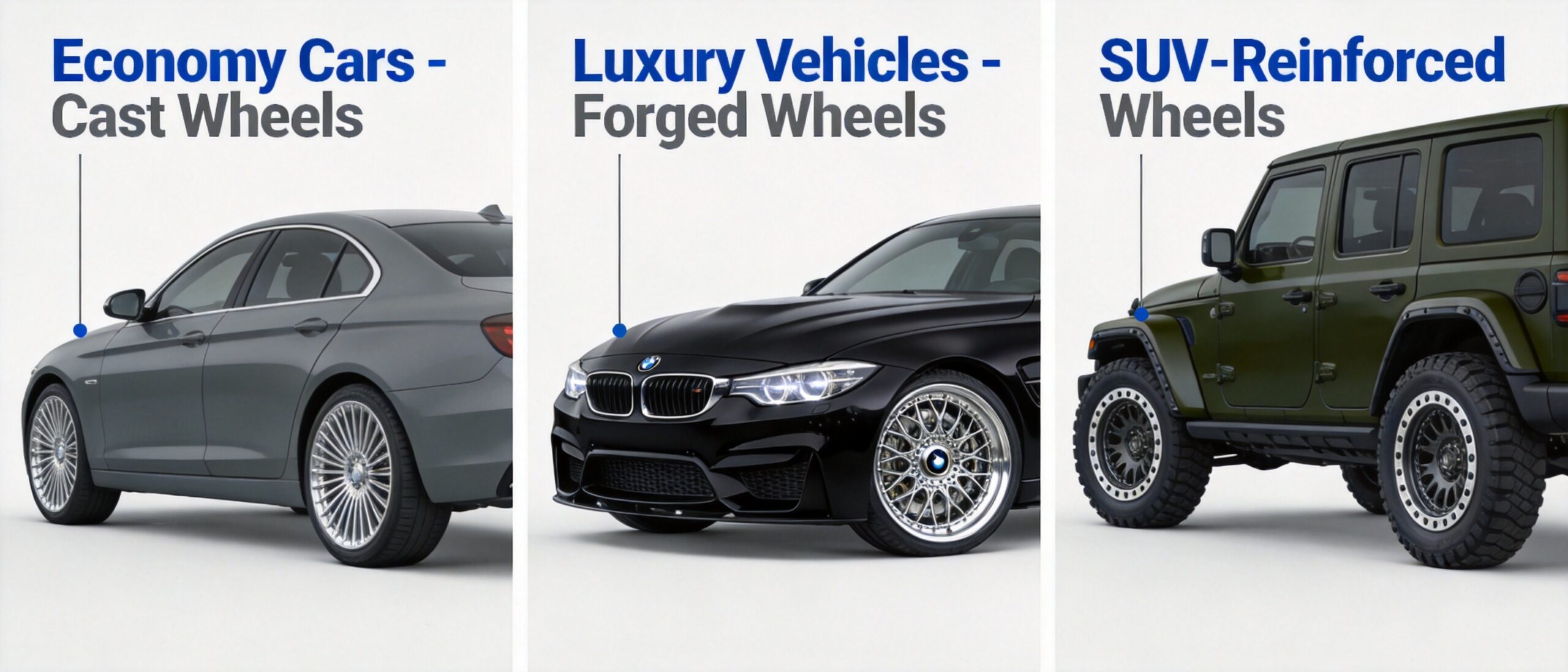
Based on my experience, here’s what I recommend to most buyers: stock both, but weight the mix based on your data.
A good starting ratio:
- 70% cast / 30% forged for developing markets
- 50% cast / 50% forged for mature markets with mixed customer base
- 30% cast / 70% forged for performance-focused shops
Track what sells for three months, then adjust accordingly.
Why Work With HolyWheel for Your Forged and Cast Alloy Wheels
I’ll keep this quick because the numbers speak for themselves.
We’ve been supplying alloy wheels to B2B buyers across 30+ countries for 20 years. Based in Guangzhou, we keep 40,000+ wheels in stock at any given time — replica wheels, aftermarket designs, and forged wheels across every popular size and bolt pattern.
Here’s what that means for you:
- Most orders ship in 5–10 days. You don’t wait 45 days for production. We pull from stock and get it on a boat.
- One supplier for everything. Cast replica wheels, aftermarket designs, forged wheels — all under one roof. One contact, one quality standard, one shipment.
- Full certifications available from our production partners. JWL, VIA, SFI, TUV, DOT — depending on your market requirements. We’ll arrange the proper documentation for you.
- Low MOQ. Test new designs with as few as 5 sets. No need to commit to a full container on unproven styles.
- 8,000+ designs for passenger cars, SUVs, trucks, and off-road vehicles.
Having said that, we’re not the cheapest option in Guangzhou. But we’re the supplier that answers your WhatsApp at midnight, double-checks your offsets before shipping, and stands behind every wheel that leaves our warehouse.
Frequently Asked Questions
Can I mix forged and cast wheels in one container?
Yes, and most experienced buyers do this all the time. Load your best-selling cast designs to fill volume, then add forged wheels for your premium customers. It’s the smartest way to serve a mixed market while keeping shipping costs efficient.
What certifications should I look for when buying forged vs cast wheels?
For cast wheels, JWL and VIA cover most markets. For forged wheels targeting the US and Europe, ask for SFI or TUV certification as well. DOT compliance matters for any North American shipment. Always confirm these before placing your order.
How do I know which forged wheel designs sell best in 2026?
Notably, deep concave five-spoke and multi-spoke designs in matte black or gunmetal dominate global demand right now. For off-road markets, beadlock-style forged wheels in 17–20 inch sizes are trending. Check our top-selling forged designs to see what moves fast from our warehouse.
What’s the typical warranty difference between forged and cast wheels?
Cast wheels usually carry a 1-year structural warranty. Forged wheels often come with 2–3 years, because the material simply holds up better over time. Fewer warranty claims = better margins for you in the long run.
Are forged wheels worth the extra cost for wholesale buyers?
It depends on your market. In the Middle East, US, and Europe, forged wheels deliver 100–250% retail margins and strong demand from luxury car owners. In developing markets like Africa or Southeast Asia, cast wheels move faster at volume. Read our complete pricing comparison guide to understand the full cost picture.
Ready to Stock the Right Wheels for Your Market?
When it comes to the forged vs cast alloy wheels debate, there isn’t a single winner. The right choice depends on your customers, your market, and your business model.
If you’re still unsure which direction to go, send us your market details — country, vehicle models, volume needs — and we’ll put together a product recommendation based on 20 years of real-world data.
No pressure, no hard sell. Just honest advice from people who’ve been in this game longer than most.
Or reach us directly:
– WhatsApp: +86 189 2873 1511
– Email: info@holywheel.com
SEO Metadata Summary
- Title Tag (56 chars): Forged vs Cast Alloy Wheels: Wholesale Buyer’s Guide 2026
- Meta Description (156 chars): Forged vs cast alloy wheels — which sells better at wholesale in 2026? Compare weight, strength, pricing & MOQ from 20 years of B2B experience. Get a free quote.
- Focus Keyphrase: forged vs cast alloy wheels
- Secondary Keywords: forged wheels wholesale, cast alloy wheels bulk, alloy wheels wholesale, wholesale alloy wheels supplier
- Long-tail Keywords: forged vs cast wheels for resale, best alloy wheels for wholesale business, cast alloy wheels bulk order, forged wheels profit margin
- LSI Keywords: aluminum alloy wheels, wheel manufacturing process, CNC machined wheels, aftermarket rims, wheel fitment, unsprung weight, wheel certifications
- Slug: forged-vs-cast-alloy-wheels-wholesale-guide
- Word Count: ~2,000
Internal Links (5+)
| Anchor Text | Target URL |
|---|---|
| forged wheels wholesale / top-selling forged designs | https://www.holywheel.com/product-category/forged-wheel/ |
| cast alloy wheels in bulk / replica wheels | https://www.holywheel.com/product-category/replica-wheel/ |
| aftermarket wheels | https://www.holywheel.com/product-category/aftermarket-wheel/ |
| off-road wheels | https://www.holywheel.com/product-category/off-road-wheel/ |
| Get Your Free Quote Now / Contact Us | https://www.holywheel.com/contact-us/ |
| pricing comparison guide | /blog/alloy-wheels-wholesale-pricing-factory-direct-vs-middleman |
External Links (Authority Sources)
| Anchor Text | Target URL | Source Authority |
|---|---|---|
| European Aluminium Association | https://european-aluminium.eu/wp-content/uploads/2022/11/aam-applications-chassis-suspension-3-wheels.pdf | Industry technical report |
| Wheel-size.com | https://www.wheel-size.com/ | Wheel fitment & specification authority |
Image Requirements
| Position | Type | Description | Alt Tag |
|---|---|---|---|
| After intro section | Infographic | Split-comparison: forged vs cast manufacturing processes side by side | “Forged vs cast alloy wheels manufacturing process comparison for wholesale buyers” |
| In forged section | Product close-up | Grain structure difference between cast and forged aluminum cross-sections | “Cast vs forged aluminum grain structure comparison showing density difference” |
| After mixed strategy section | Data chart | Inventory ratio pie chart showing recommended cast vs forged stock mix by market type | “Recommended inventory ratio of forged vs cast alloy wheels for wholesale buyers by market type” |